
Be Prepared: Emergency Preparedness for Older Adults
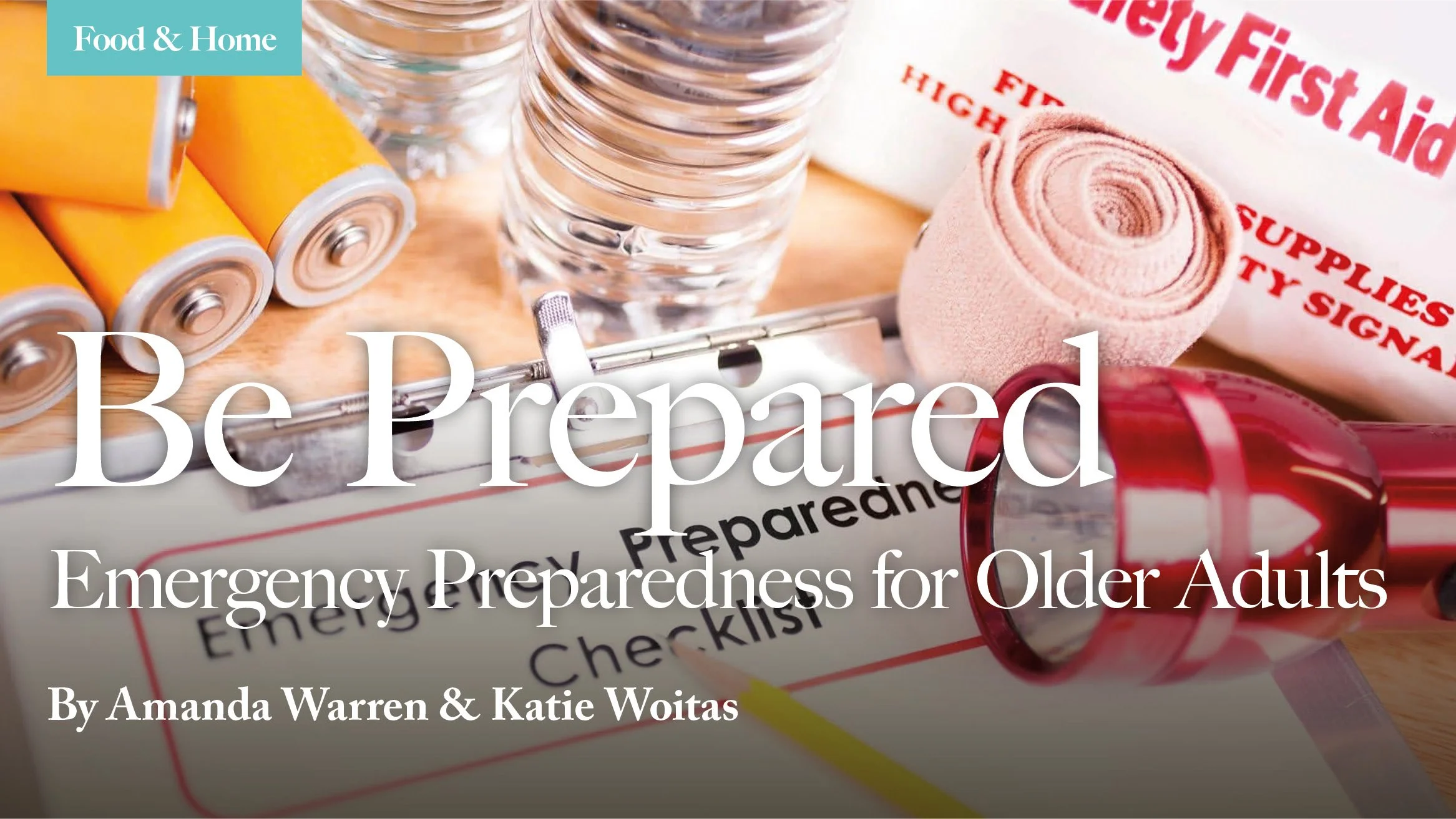
By Amanda Warren & Katie Woitas
When was the last time you experienced a disruption or emergency? Our minds often jump to headline-making events, such as wildfires that force entire communities to evacuate or tornadoes that tear through neighbourhoods. But emergencies don’t always look like that. In Alberta, where we have varying climates and risks, they could include power outages, severe storms, extreme temperatures or even wildfire smoke—and that’s just the start of it.
When you consider the different types of hazards in Alberta, it becomes clear just how frequently they can interrupt our routines, limit access to services and create uncertainty. While we can’t control when these events happen, we can be prepared for when they do occur.
The best way to start is by making preparedness part of your daily life. It doesn’t have to be a big project you undertake in one weekend. Instead, preparedness is a journey built by taking small, manageable steps that strengthen your overall resilience. These efforts can reduce stress, lessen financial impacts, and boost your confidence when facing the unexpected.
The Be Prepared program, developed by the Alberta Emergency Management Agency, encourages Albertans to take those first steps, whether preparing for everyday disruptions or larger emergencies and disasters. Read on for practical tips to get started and build preparedness into your everyday routine.
PREPAREDNESS IS PERSONAL
Preparedness is personal. The steps we take depend on where we live, our health needs, our support systems and the unique day-to-day aspects of our lives.
As we age, our needs may change. Changes in mobility, strength or sensory awareness, along with the need for medications or medical equipment, can impact our emergency planning. Your living situation should also be considered. While some live independently, others may live in a care facility, in a rural area or far from loved ones and support networks. Some may also care for dependents, pets or livestock. All these factors should shape the preparedness steps we take and the plans we make to keep ourselves and loved ones safe during emergencies.
EVERYDAY PREPAREDNESS STEPS
Taking one small preparedness step could be as simple as starting a conversation with loved ones, storing extra water, medications or snacks at home, or reviewing and updating your insurance. Or it could include building an emergency kit or creating an emergency plan for your household. The preparedness steps we take today can support us during different hazards and disruptions in the future.
Get and stay informed: Identify trusted sources of information, such as local news and community communication channels, including social media and web pages. Download the Alberta Emergency Alert (AEA) app for critical, life-saving alerts.
Make community connections: Create a buddy system with community members or friends (e.g. for checking on each other or your pets or providing a ride during an evacuation).
Build financial resilience: Check your insurance policy annually to understand coverage, limitations and the options available to you. Create and maintain an inventory with photos of personal belongings and property in case you need to file a claim. Keep the list in a safe place.
Prepare your emergency supplies:
Gather emergency supplies at home for sheltering in place to support your household for a minimum of 72 hours, but ideally a week or more.
Maintain an emergency kit with items unique to your needs, including food and water, medications and medical supplies, important documents, chargers, seasonal clothing, identification and sentimental items.
Plan for pets, if you have them. Animals have unique needs during emergencies. A grab-and-go emergency kit with food, medications, carriers and first-aid supplies helps keep pets safe during evacuations or service disruptions.
Make a plan:
Talk to your health-care provider about how to fill prescriptions if you are evacuated from your community.
If you use mobility equipment, talk with your health-care provider about alternatives in case you are unable to evacuate with it.
If you require caregiver support, keep copies of required documentation, a list of medical devices and assistive equipment, and a backup plan in case your usual caregiver is unavailable.
These everyday preparedness actions help you build resilience towards all hazards. Depending on where you live or travel, your risk to certain hazards may be higher. The following sections highlight common summer hazards in Alberta and tips on how to prepare for them.

WILDFIRE AND SMOKE
In Alberta, wildfire season typically runs from March 1 to October 31 but may occur year-round. Hot, dry and windy conditions increase wildfire risk.
Preparedness tips
Stay informed by checking fire danger ratings and visiting the Alberta Wildfire website to view active wildfire locations.
Protect your property and belongings by implementing FireSmart methods to reduce fire risk.
Include personal protective equipment like respirators (e.g., N95, KN95 or P100) or high-quality medical masks in your emergency kit. Standard paper or cloth masks offer limited protection.
Pack an emergency blanket or fire-resistant covering in your kit to protect against embers.
Bring emotional coping items, such as a list of support contacts, blankets, photos, books and journals, to help manage stress.
Smoke and ash tips
Monitor local air quality conditions and follow the directions of air quality alerts as conditions can change quickly.
Wildfire smoke can cause various symptoms and health effects.
If you experience symptoms, talk to a health-care provider, or seek medical attention if they are severe.
Reduce your exposure by minimizing your time outdoors. Cancel or reschedule activities.
Stock up on essentials to reduce last-minute trips outside.
Contact local authorities to locate clean-air locations. Public spaces, including malls, libraries and recreation centres, can provide temporary relief.
Monitor animals for signs of distress and seek veterinary care if symptoms occur. Wipe or brush them off after coming indoors to remove smoke particles from their fur.
EXTREME HEAT
Extreme heat events are becoming more common. High temperatures, especially when overnight cooling is limited, can be dangerous. These events, especially if prolonged and with high humidity, can pose serious health risks for everyone.
Preparedness tips
Find a buddy who can help cool your home, find a cooler location, check on you regularly, recognize the signs of heat-related illness and know when to call for help.
Make a list of places with air conditioning (e.g., homes of loved ones, libraries, shopping malls, community centers) and outdoor areas with cooling features such as parks with water fountains, misters, spray parks, etc. If you have pets, include some pet-friendly options.
Identify areas in your home that stay the coolest and consider how to keep them cool and set them up for sleeping.
Install curtains, window coverings, reflective film or heat control coverings for windows.
Inspect, and replace if needed, weather-stripping on doors, windows and window air conditioners to stop hot air from coming into your home.
Never leave people or pets in a vehicle when temperatures can spike quickly. If you see an unattended person or pet in distress during extreme temperatures, call 911. When an extreme heat event occurs with wildfire smoke, prioritize keeping cool because overheating can be more dangerous to your health.
SEVERE STORMS
Severe storms occur frequently. Thunderstorms, lightning and hail can develop quickly and threaten life and property.
Preparedness tips
Monitor local news and weather reports for up-to-date information on thunderstorm conditions, weather warnings and storm maps.
Identify safe shelter locations and plan the supplies, medical equipment and comfort items you and your loved ones may need for several hours or days.
Secure loose objects outdoors in case of strong wind and cover your vehicle in case of hail.
If there’s a tornado in your area, seek shelter immediately and remain in place until the severe weather passes. If you are outdoors, get to low-lying ground, lie flat and protect your head from flying debris.
COMMUNICATION TIPS FOR AN EMERGENCY
Emergencies can impact your usual services, like telecommunications and power, making communicating with loved ones a challenge. What can you do now, when the risk is low, to prepare if an evacuation order arises?
Develop a communications plan
Create a contact list, including who you will contact and who will check in on you during emergencies, such as caregivers, loved ones and community organizations.
Designate someone who lives out of town as a central point of contact for you and your loved ones. Ensure you all have their contact information.
Pick three meeting places to reunite with your loved ones or household if separated: one near home, one outside of your immediate community and one out of town.
Create print and digital copies of your communications plan. Ensure your household and support network have copies.
If you use social media, use the “Safety Check” feature, if applicable, on your platforms. This feature allows you to mark yourself safe and inform others of your well-being. You can also search for and find loved ones to see if they are safe.
Keep extra batteries or a charger for your mobile device in your emergency kit(s), and don’t forget to take them out and charge them a few times a year.
EVACUATION PLANNING
Emergencies can happen quickly and may require you to evacuate with little notice. Preparing in advance and understanding emergency alerts can help keep you and your household safe.
Understand the difference between evacuation alerts, orders and rescinded notices so you can prepare, respond and return safely when directed.
Review your insurance coverage. Most policies provide financial assistance or short-term housing if you are evacuated.
If you live in a multi-storey building, know your building’s evacuation plan. Review stairwell locations and exits. Know evacuation routes and avoid using elevators during emergencies.
If you’ve experienced an evacuation before, identify potential emotional or environmental triggers, and develop coping strategies to help remain calm ahead of time.
No matter our age, lifestyle or circumstances, we all have a role to play in emergency preparedness. When we are better prepared for disruption, emergency personnel can focus on supporting those most impacted, and communities can recover more quickly.
The idea of emergency preparedness might feel overwhelming, but it’s not about being ready for the next disaster; it’s about making it a part of our day in a way that makes sense for us. Knowing the risks around you and taking small steps to prepare over time builds resilience during uncertain situations. The Be Prepared program is here to help, with free programming and resources that can support your preparedness learning at alberta.ca/BePrepared.
What is the Be Prepared program?
The Government of Alberta’s Be Prepared program strengthens emergency preparedness by encouraging Albertans to be ready for emergencies by taking preparedness steps year-round. The program supports individuals, households, and communities by providing free tools, resources, and education to increase risk literacy and encourage preparedness actions before, during, and after an emergency.

Katie Woitas
Katie Woitas is a risk reduction communications specialist with the Government of Alberta. Katie develops resources to help Albertans prepare for emergencies as part of the Alberta Emergency Management Agency.

Amanda Warren
Amanda Warren is a personal preparedness program consultant with the Government of Alberta. She works closely with subject-matter experts to develop programs and resources that provide Albertans with current, evidence-informed emergency preparedness best practices.