
Powering Progress: How a Clinical Trial in Alberta Rewrote a Terminal Diagnosis
After an exhausting cross-country search for answers, an Alberta mother found a life-saving medical breakthrough waiting right in her own backyard.
In the dark days of 2020, Sara Spearey sat in her home, doing a heartbreaking calculation. Diagnosed with a rare, terminal neuroendocrine cancer that had metastasized extensively into her bones, she was told she might only have months to live. She began to wonder what milestones she would miss in her children’s lives, desperately hoping she might just survive to see her 60th birthday.
This August, Sara is celebrating that landmark 60th milestone with her cancer at a complete standstill, thanks to a groundbreaking clinical trial offered in Alberta backed by donors.
“One of the biggest gifts of this trial is that it’s allowed me to forget about my disease,” says Spearey. “That’s a huge trajectory from where I started. Now I can actually go about my life, and I feel better than I’ve felt in years.”
Cancer had always loomed large in Spearey’s family; her grandmother, mother, and sister all faced breast cancer, and her father passed away from multiple myeloma. Determined to protect herself, Sara did everything right. She maintained an active lifestyle, worked with a nutritionist and never smoked or drank alcohol.
Still, cancer found a way through. In late 2016, a routine scan uncovered a rare adrenal gland tumour. What was initially expected as a straightforward surgery with a six-week recovery instead became a gruelling, multi-year struggle. Following her tumour removal in 2017, Sara was left with a deep fatigue that permanently derailed her career.
In 2020, a routine follow-up scan revealed the cancer had returned, spreading aggressively through her spine, ribs, and clavicle. Because it was a rare neuroendocrine tumour with no standard cure, local options were initially limited to a “watch and wait” approach.
Refusing to give up, Sara sought specialized care in Toronto, where her family was from, flying across the country every three months for a year for treatments.
The turning point came when her team identified a global clinical trial for a targeted oral medication called Belzutifan. Crucially, Calgary’s Tom Baker Cancer Centre was one of only two sites in Canada equipped to host it. Sara transitioned her care back to Alberta under oncologist Dr. Dean Ruether.
Four years later, her cancer remains completely stable. Sara’s health has returned so profoundly that she now travels internationally to advocate for quicker cancer diagnoses, better access to specialized treatments, and more funding for local clinical trials. Most importantly, she has been there to witness her son’s graduation from the University of Alberta and her daughter’s entry into university.
Sara’s extraordinary outcome is a snapshot of a much larger story unfolding across the province. Over the past 20 years, Alberta’s cancer survival rate has increased by 8.7 per cent—the most significant improvement in Canada, moving the province from one of the lowest survival rates to one of the highest.
This progress is the result of a deliberate, decades-long effort driven by the power of community investment. Over the last 40 years, approximately two million individual donors, corporations, and foundations have given to the Alberta Cancer Foundation, helping it power the clinical advancements that elevate provincial care.
“No other charitable organization supports Albertans facing cancer as completely as we do,” says Wendy Beauchesne, CEO of the Alberta Cancer Foundation. “Our role is to ensure our cancer system has the resources to constantly evolve, innovate, and deliver tomorrow’s medicine today.”
Money raised by the Alberta Cancer Foundation stays in Alberta, supporting Alberta patients, Alberta researchers and Alberta’s 17 different cancer centres. By keeping investments local, the foundation fuels homegrown expertise, ensuring Alberta remains a global leader—not a follower—in cancer care.
This funding model has driven landmark advancements that deliver world-class care close to home. These include the mobile Screen Test program, providing advanced breast cancer screening to 120 rural and Indigenous communities; the Patient Financial Assistance Program, helping thousands manage treatment-related expenses; and the acquisition of two donor-funded MR-Linac machines at the new Arthur J.E. Child Comprehensive Cancer Centre in Calgary—a Canadian first that can cut radiation schedules from 39 sessions down to fewer than 10. Importantly, the Foundation also helps support every cancer clinical trial that runs in Alberta.
For Sara, who continues to receive treatments at the Arthur J.E. Child Comprehensive Cancer Centre, donor-fueled innovation didn’t just change her prognosis—it redefined her future.
“The funding of these trials changes people’s lives,” says Spearey. “I know I’m only one person, but that one person has a family, kids, and a husband. It has given me my life back. It has given my kids their mother. I’m just so grateful.”
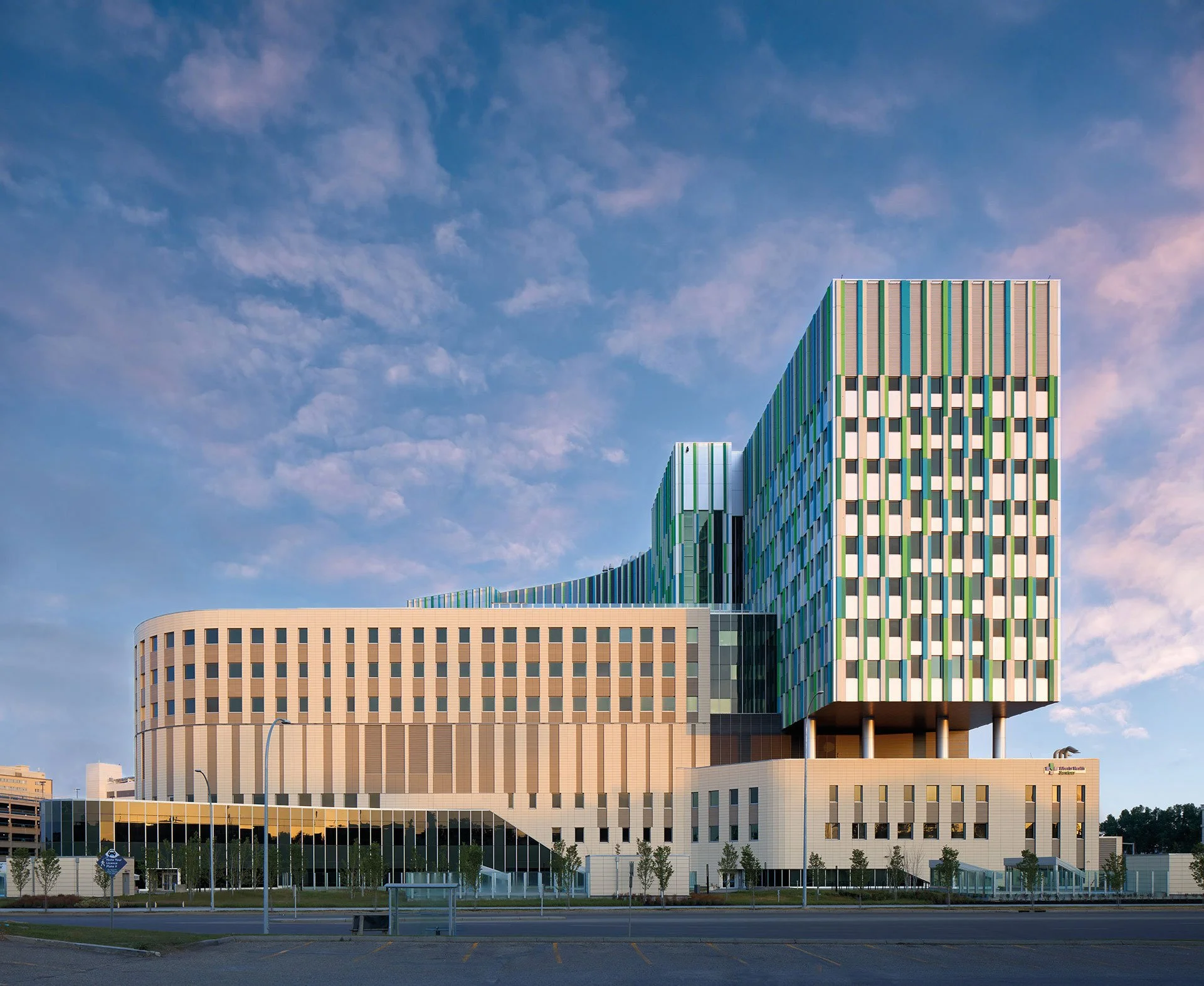
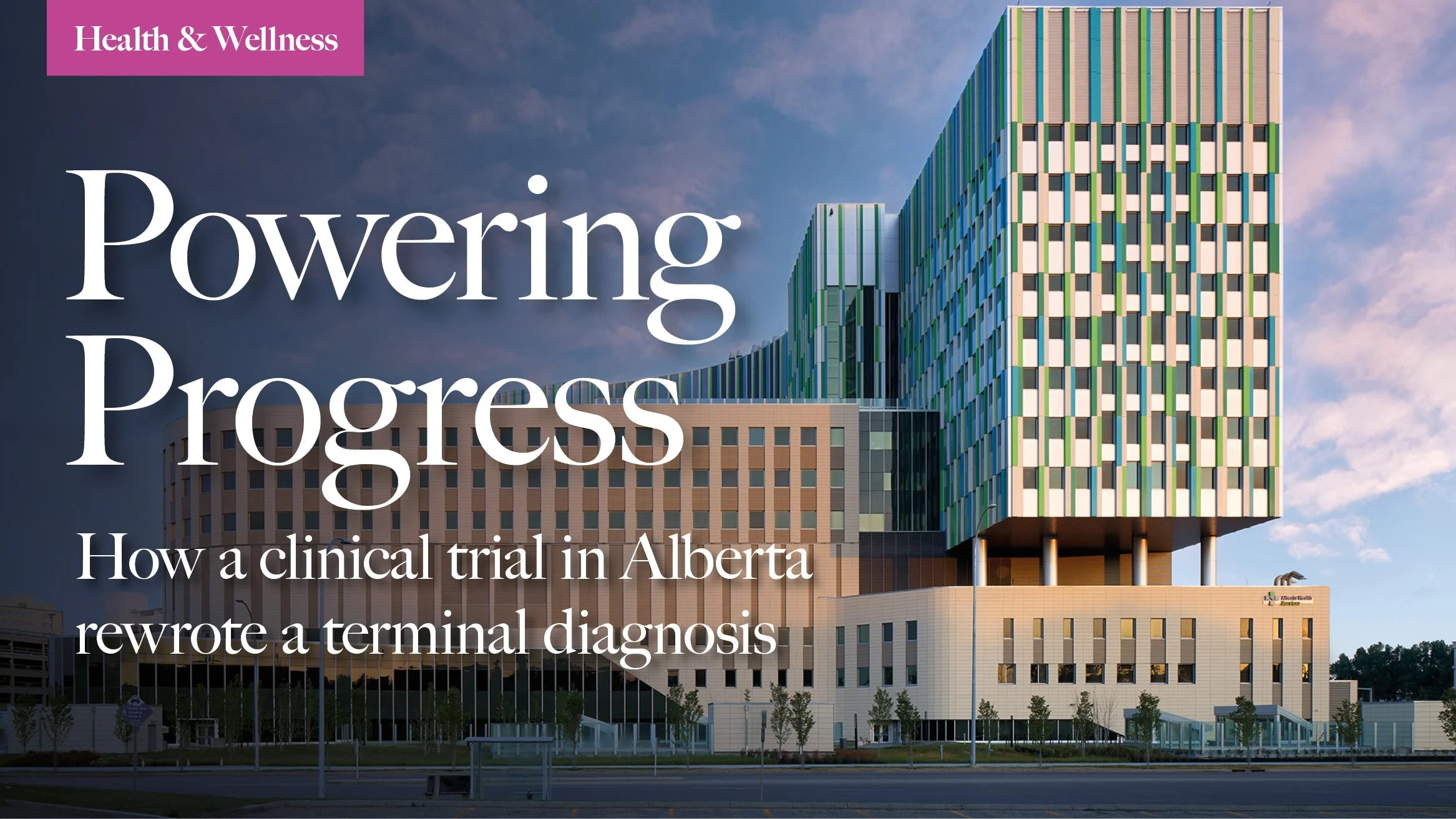
The Arthur J.E. Child Comprehensive Cancer Centre in Calgary, Alberta.
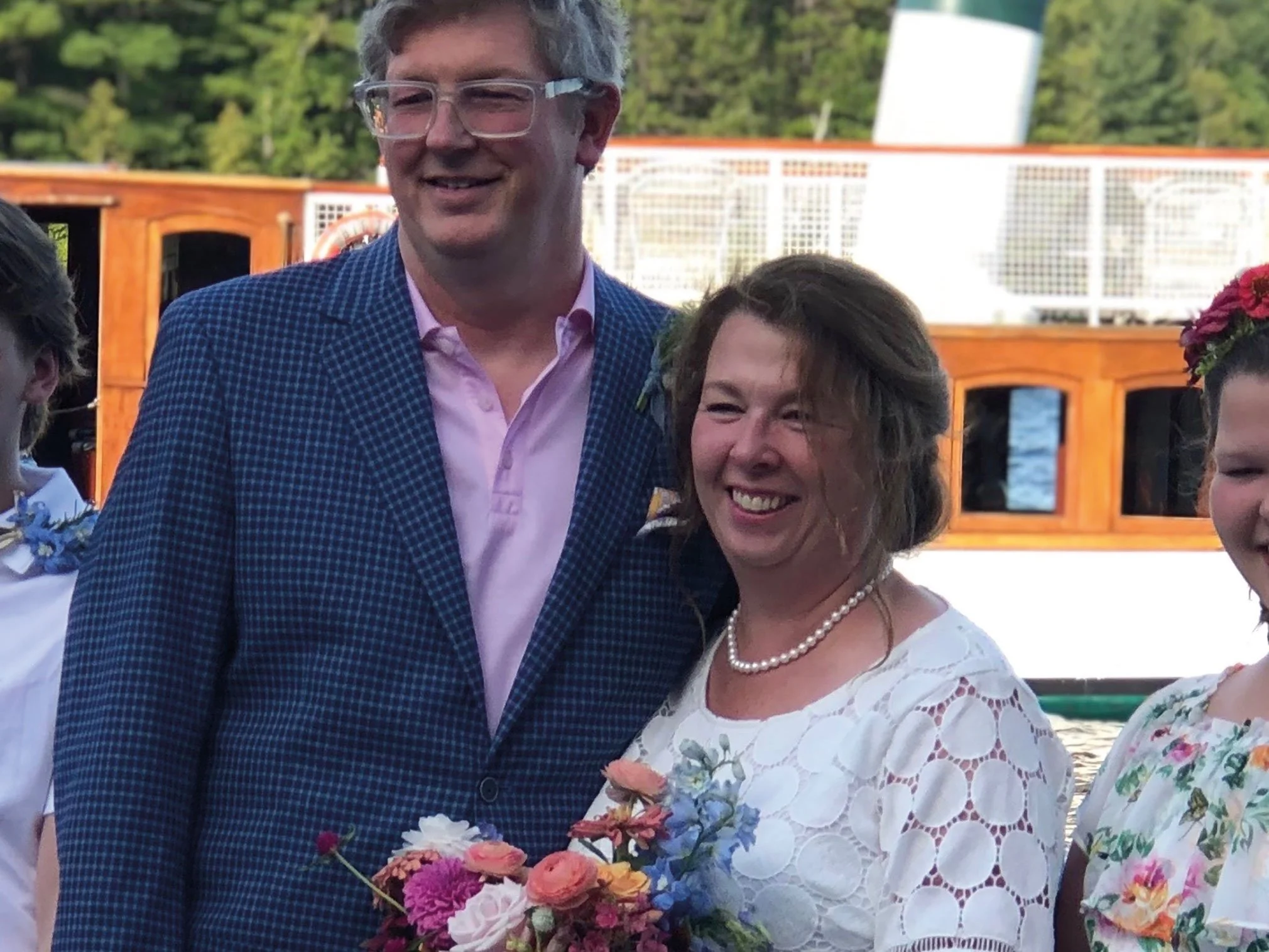
For Sara, celebrating life’s milestones became even more meaningful following her cancer diagnosis: Sara Spearey enjoying a warm vacation in 2019 and Sara and her husband, Peter, on their wedding day in 2019.