

On The Cover
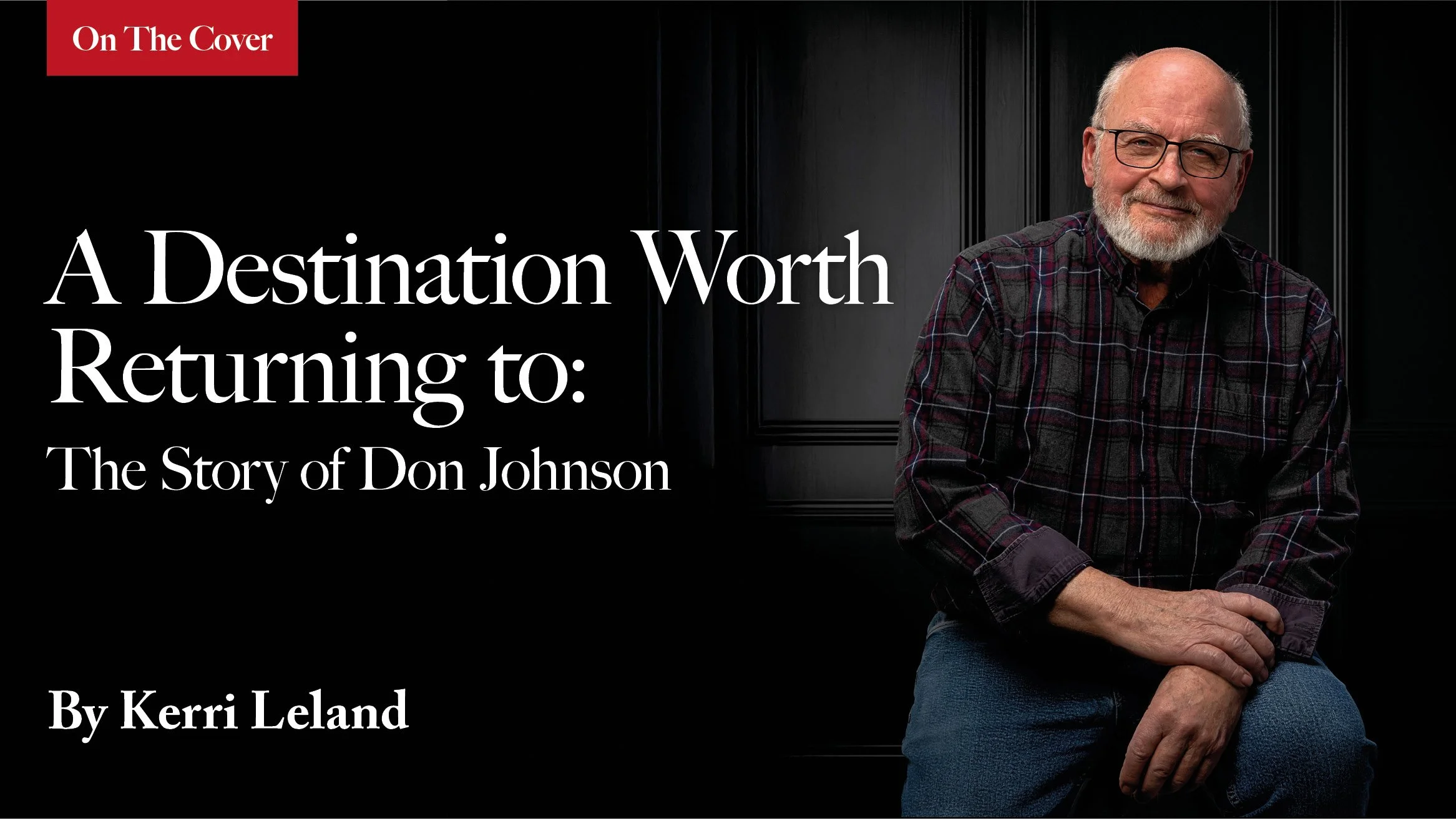
A Destination Worth Returning to: The Story of Don Johnson
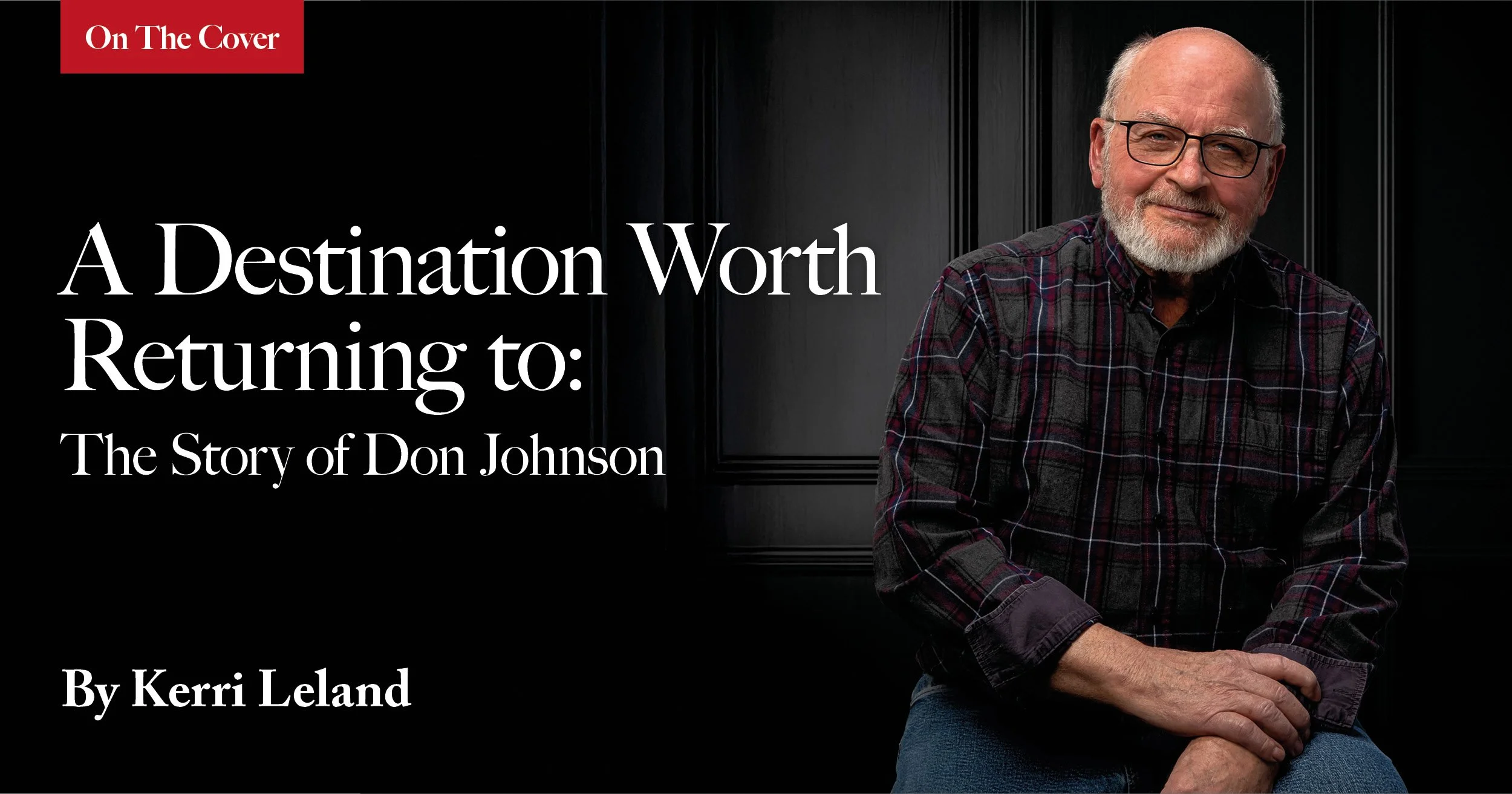
When the idea of Alberta Senior Living started brewing in my mind, I knew that I wanted to share stories that captured the essence of this province: grit, ambition, resilience, and community. It didn’t take me long to realize that the story I was looking for was one that I’ve known for my whole life. It’s the story of my father, Don Johnson.
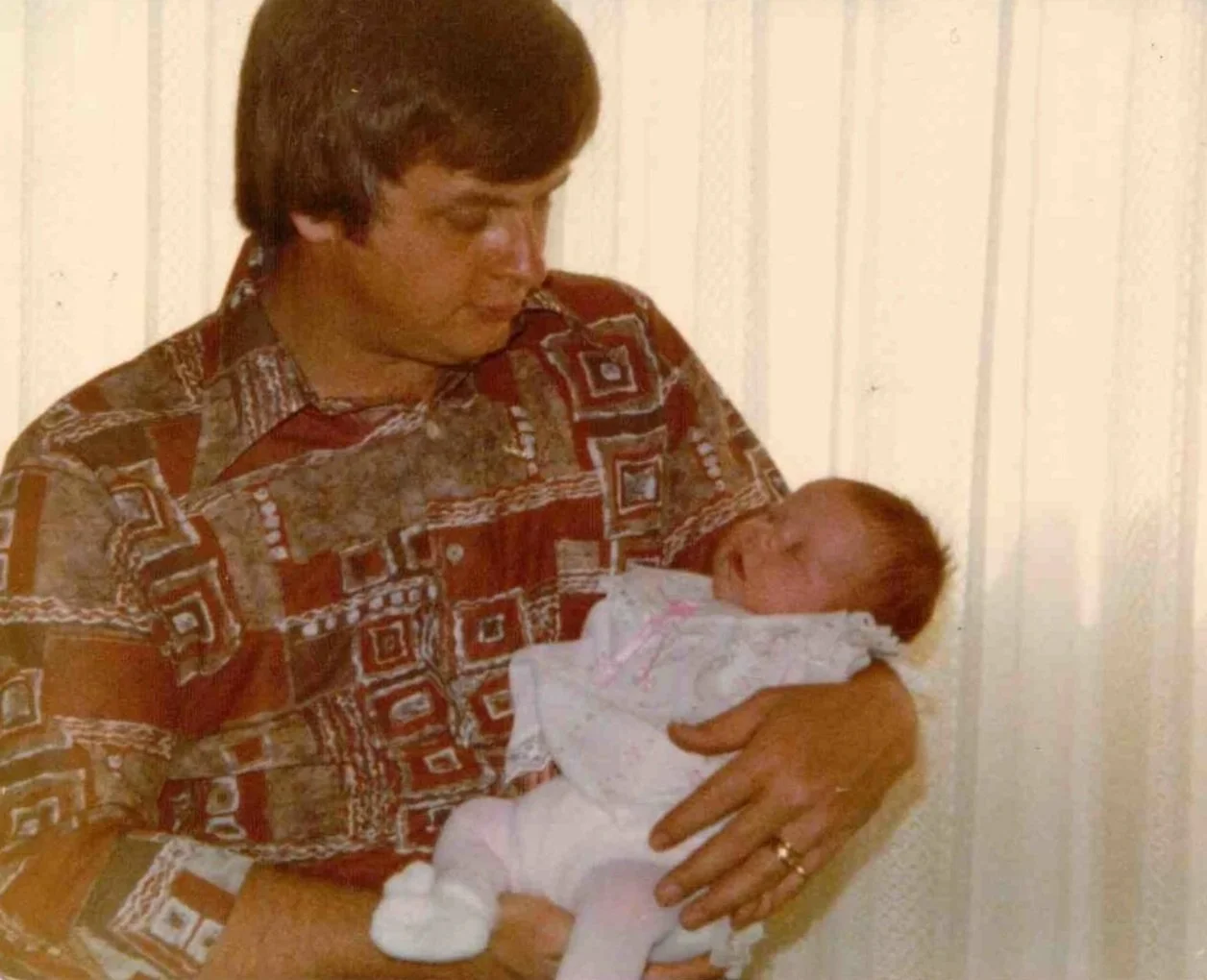
Don holding his youngest daughter, Kerri.
ROOTS IN FROZEN GROUND
Don Johnson grew up in an Alberta that many readers will remember: one where water was pumped from a well, warmth came from the woodstove, and winter meant a frosty run to the outhouse before daylight.
“We weren’t rich,” Don reflects, “but we were self-sufficient. Those were the days you carried water into the house, and the outhouse was mighty cold in the winter.”
Church was the gathering place, and community was built face-to-face.
For the five Johnson children — three boys and twin girls — life was a mix of chores, school, imagination, and responsibility.
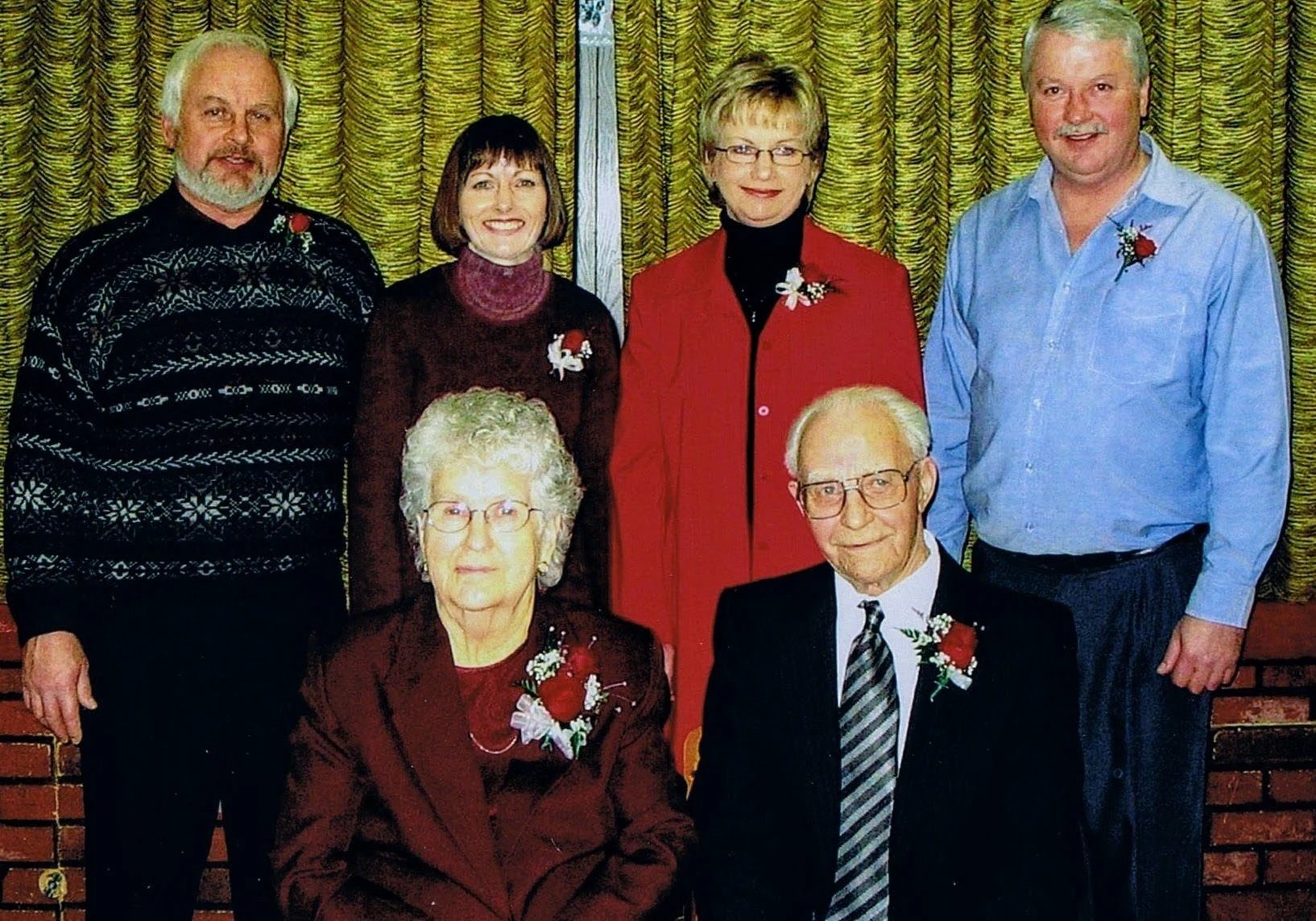
Don with his twin sisters Kathy and Karen, brother Alan, and parents Kathleen and Wilfred.
Don often speaks about how hard his parents, Wilfred and Kathleen, worked and how much they sacrificed. He still remembers the heartbreak of losing his younger brother, Mervin, when he was just five years old, in the era before public healthcare, when his parents paid the hospital bill with bags of potatoes every fall for years.
“I remember staying at my grandmother’s place when my parents took Mervin to the hospital in Edmonton,” Don shares. “They were told not to visit him as he would become upset when they had to leave. Five weeks after my brother was admitted, he passed away.”
School in the early years was a two-room schoolhouse where one teacher taught all grades. On the playground, they built elaborate snow tunnels in winter and tree huts in summer. “We were all in the same situation financially,” Don says of the kids he went to school with. “No one had the latest trends, so there was nothing to keep up with. It was a good time.”
And while he did plenty of farm work, such as cutting and splitting wood, feeding animals, hauling water, he admits with a smile that he had a lot of excuses not to help.
“I remember riding my bike and wishing I lived in the city. They had paved streets; we had gravel roads. They didn’t have to carry water or use an outdoor toilet. They didn’t have chores. But I had the freedom of wandering around the farm watching animals,” Don says.
What captured his imagination most was watching his father fix things.
“He could fix anything,” Don recalls. “Tools that would be thrown in the garbage today, he made them work. I think that’s where it started for me.”
“I credit him for starting me on the journey of becoming a mechanic. Before I had my license, a neighbour friend had mounted a small engine on a bicycle frame along with pulleys and belts, and it became a motorized bicycle. When he no longer wanted it, I bought the thing, and proceeded to tear apart the engine for no other reason than to see how it worked,” Don chuckles.
The farm wasn’t always glamorous, but it planted skills and instincts that would eventually take Don far beyond its borders.
THE BOY WHO WANTED TO SEE THE WORLD
Don’s curiosity stretched beyond the gravel roads and the farm fields. Getting his driver’s licence at 16 felt like a door opening, even if it still depended on his parents’ gas tank. At 18, he applied for a job as a snowmobile operator at the Columbia Icefields. Friends teased him: They’re not going to hire a farm kid for that. But a month later, a letter arrived with a start date.
“It was a fun job,” he said. “We’d take tourists onto the glacier, let them walk around, and tell them stories. On good trips, we even made money off tips.”
That adventure-seeking spirit pushed him to enroll in an Aircraft Maintenance Technology program, setting him up for a career that would take him across Canada and around the world.
His first northern assignment had him flying through Yellowknife and Cambridge Bay, before landing at a rigsite he didn’t even know existed.
“I had a summer jacket and a comb...that’s it,” Don said. “I wasn’t prepared for the North at all.”
He learned quickly, servicing float planes, flying through rain showers, eating lunches on still northern lakes, and even taking the controls of a Single Otter mid-flight when the pilot surprised him.
“He asked if I would like to fly. Thinking this could be fun, of course, I agreed. I did pretty well, flew through a rain shower, and as we got closer to the base, he asked if I wanted to try landing. Of course, I said no,” Don chuckles.
“On the way to the hotel that evening, the pilot asked how many hours I had. I said about 45 minutes. It turns out, they had told him they were sending a qualified pilot.”
It was a season of saying yes, of testing himself, and of discovering a world much larger than the one he’d grown up in.
LOVE, LOSS, AND THE LONG ROAD BACK
It was before those years of exploration, at the age of 16, when Don first noticed Lois. “She was very attractive,” he said, grinning at the memory. “She had a good sense of humour, and we got along.”
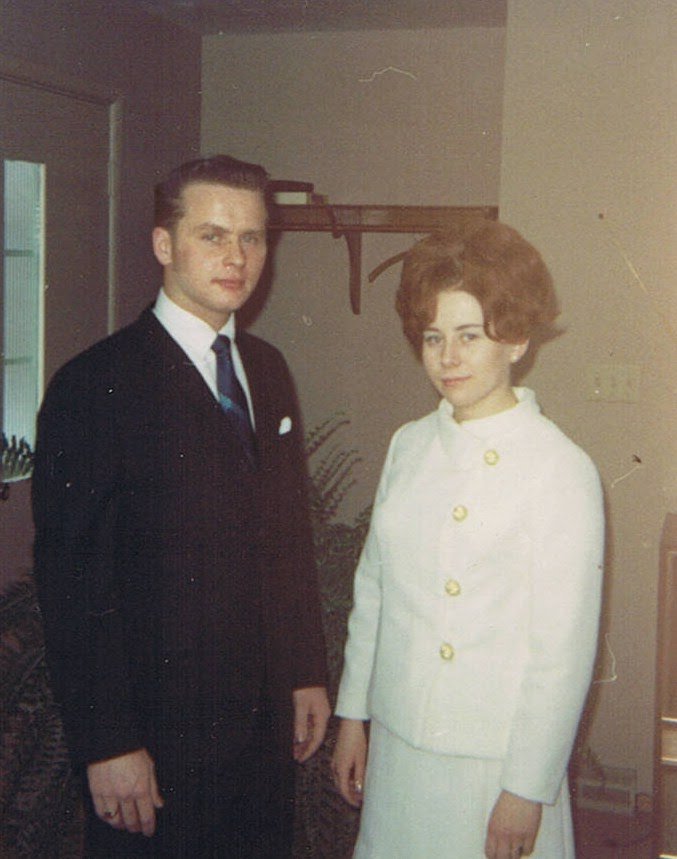
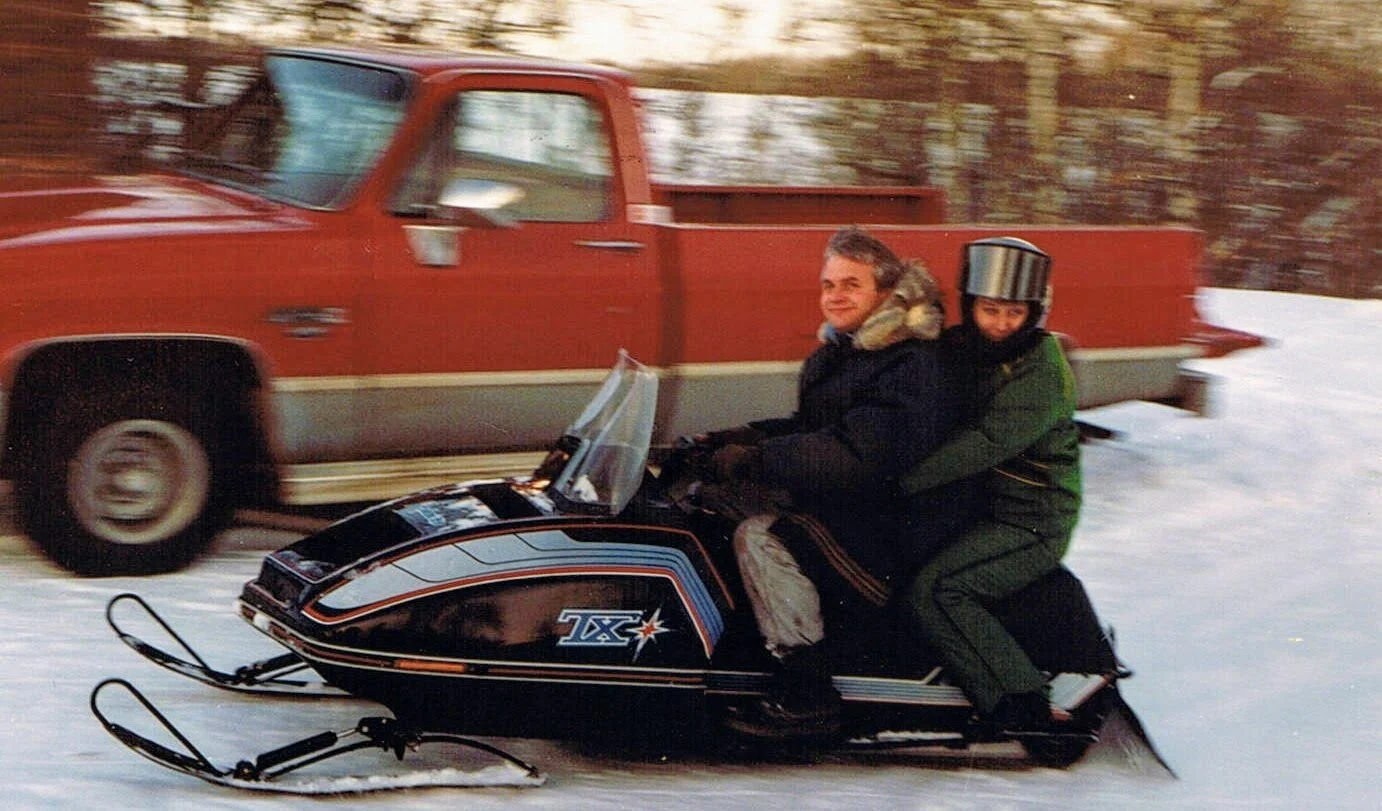
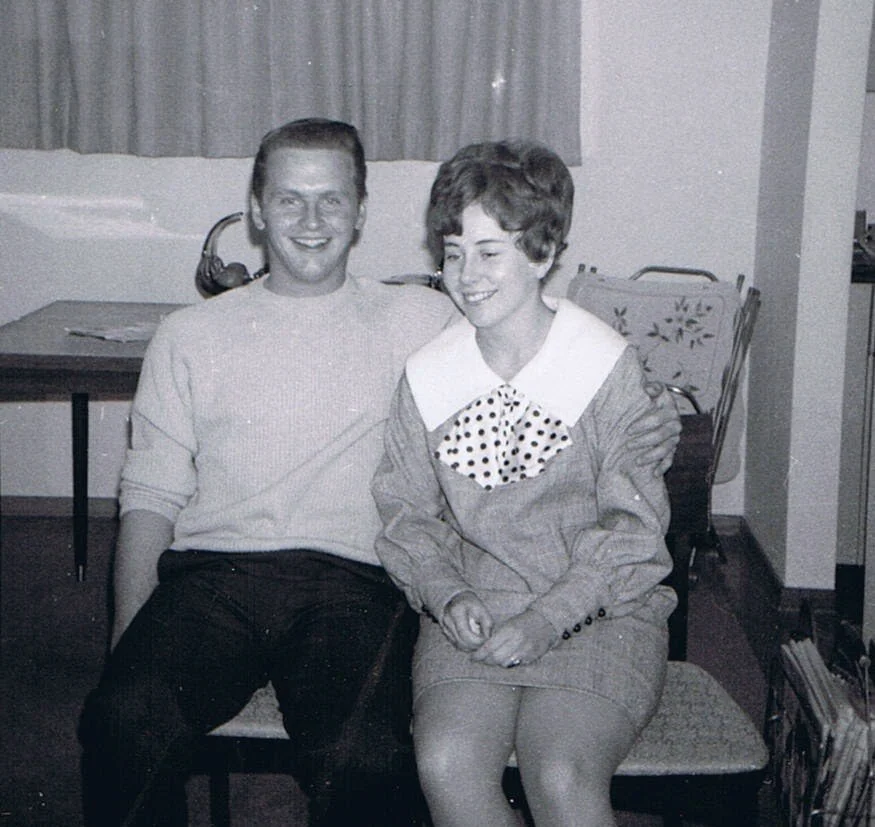
Lois became a Registered Nurse. He married her, and together they built a life anchored in faith, hard work, mutual support, and laughter.
Their love was steady; the kind that strengthened through everyday moments, shift work, shared meals, and the familiar rhythm of raising two daughters.
Don speaks of her with deep warmth, admiration, and a nostalgia that reveals just how central she was to his life.
“She was in control in the best possible way. When I was away from home, I never worried — I knew she was taking care of our family,” Don reminisces. “She could talk to anyone about anything because she truly listened, and always knew the right way to respond. When it came to entertaining, she thought through every detail, from the moment guests arrived until they left. And she cared deeply for others, never hesitating to open our home to someone who simply needed a bed for the night.”
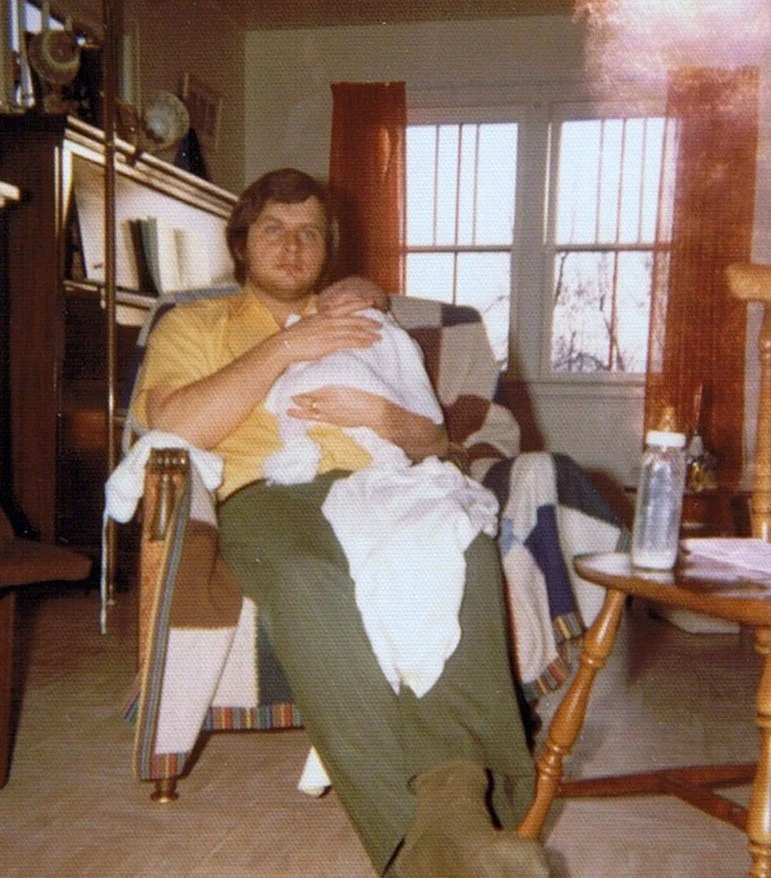
Don holding his eldest daughter, Kjristen.
To support his growing family, Don joined Pacific Western Airlines (PWA). He became increasingly fascinated by the Hercules aircraft and eventually joined the team that serviced them in the Arctic. The work was demanding and sometimes dangerous, with long, dark nights in brutal cold, endless repairs, and odd hours, but it taught him resilience, discipline, and teamwork.
“The first trip was definitely an eye-opener,” Don recalls. “It was hard to find the glory when it’s 3 a.m., -35 with the wind blowing, on a ladder checking engine oils. But the money was better.
“The next trip was to Resolute Bay, and it was basically the same. While the plane was being loaded, we did the servicing. One particular night, this other fellow and I changed out a component; it took over eight hours. We did a test run, and it failed, and to add to the disappointment, we had to change a tire.
“Most of the work involved servicing oil rigs in the Arctic. The flight crews definitely earned their money as the conditions they flew in were not the best. When there was work for the aircraft in the country, our time away would be two weeks. When the aircraft was out of the country, we were expected to be away for 28 days. It was tough on my wife as we had our two daughters, but I don’t remember her ever complaining. Or maybe I didn’t hear her complaining.
“I really enjoyed working with three other technicians and the flight crews. Most of the time, it was an adventure: trips to Africa to support a mining operation or servicing an oil rig, hauling a load to Argentina. They were all good. Sometimes the countries we were in were scary, but we did our best.”
Still, as his daughters grew, Don felt time moving faster than he wanted. He shifted into a maintenance planning role with a pipeline company, a drastic change from Arctic runways to office life.
“Talk about an adjustment! Two weeks prior, I was working on an aircraft engine in -38 degree weather with 30 mph wind,” he remembers. “It took me a year to adjust to this new environment. It was a good move. I was home with my family and enjoyed the activities that came with being at home.”
As his daughters started their own lives, Don and Lois became empty nesters and decided to move to Calgary after realizing they missed the busyness of having the girls around.
Then came the loss that would reshape everything.
When his wife passed away unexpectedly, all of Don’s plans for his life changed.
“It was tough,” he shares quietly. “I needed to be strong for my girls, and I think they were strong for me.”
Faith held him together. His daughters gave him purpose. His community offered steadying hands.
And even through grief, family remained his compass: his daughters and his siblings, with whom he has always stayed close, and eventually, his four grandchildren.
Two years later, when his company went through restructuring and he was let go, Don found himself alone in Calgary with too much time to think.
“I did a lot of thinking,” he said, “about what I wanted life to look like now.”
Piece by piece, the answer pointed home.
THE RETURN
Don bought the farm where he’d grown up, built a shop, moved his belongings, and eventually completed the house he now lives in, sharing a homestead with the old farmhouse that he grew up in and his father had grown up in.
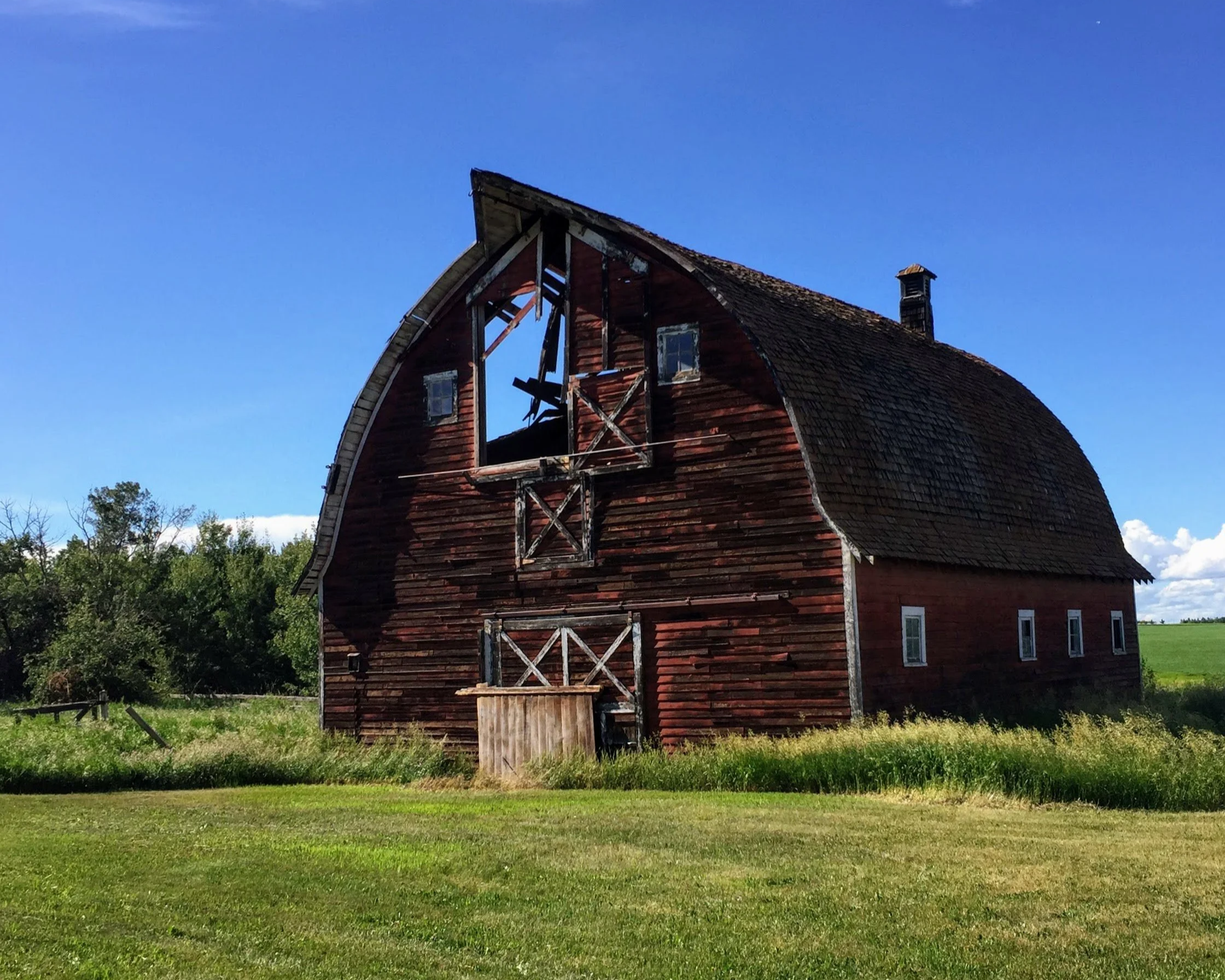
“I moved back to the community not knowing what to expect,” Don shares. “I wasn’t the best behaved when I was a kid, so I was hoping the older folks wouldn’t remember those things that weren’t so good. But in my defence, I had also changed.
“As I met those whom I had known years ago, and the people who had moved into the community while I was away, it was much better than I thought.”
Don reconnected with old school friends (“many of whom,” he jokes, “had aged more than I expected”) and built new relationships with neighbours who quickly became part of his everyday life. He joined the museum board and repaired equipment for what felt like half the county.
He also found his way back to music.
He’d grown up singing at church, at school, in youth Christmas programs, but decades passed without it.
“My mother and father both sang in the small church choir,” he recalled. “In high school, a teacher involved a few of us boys in four-part harmony. Then life got in the way.”
Back at the farm, friends invited him to join a group of men singing Southern Gospel in churches and seniors’ homes.
“That was 15 years ago,” he said. “They encouraged me, and I’m thankful for that. It’s rewarding to bring a message of hope, have coffee, and visit afterward. Even though I’m an introvert, it feels good to do it.”
Behind the humour — like his line about “scouting out good seniors’ homes for ourselves” — is a real sense of purpose.
“There are a lot of stories in those places,” Don said. “People are lonely. Visiting with them... it matters.”
A LIFE MADE WHOLE
Today, Don’s life is full in a quieter, steadier way. He takes pride in preparing Scandinavian dishes, such as Lutefisk and Lefse, for community suppers: a nod to heritage, memory, and belonging. It connects him to the past, to the people he loves, and to the traditions he is helping to pass down to his grandchildren.
In this season of life, Don has also found joy in a close companionship that has quietly enriched his days.
He enjoys sharing good conversation, laughter, and venturing into places he might not have imagined before, like the opera. It’s a reminder that connection doesn’t have an age limit, and that life still offers room for learning, culture, and unexpected twists and turns.
Family remains at the heart of everything. Don lights up when he talks about his one grandson and three granddaughters: their curiosity, their independence, the way they bring energy into every room. He wants them to know they are capable, that their ideas matter, and that trying, even failing, is worthwhile.
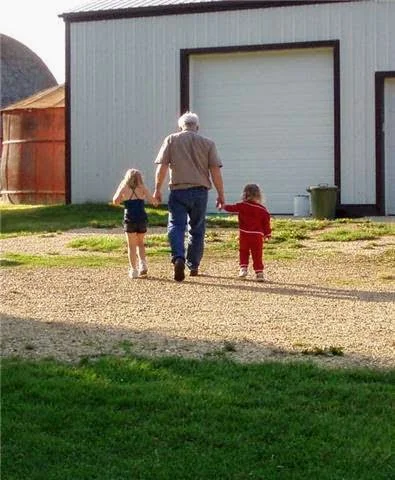
Don walking with two of his granddaughters when they were young.
“It’s better to try and fail than never to have tried at all,” he says often. “You learn from your mistakes.”
It’s a lesson shaped by decades of experience, loss, adventure, and faith. And it’s one he hopes they carry with them long after he’s gone.
Though life has taken him far, Don remains grateful for where he is now, surrounded by the land that raised him, the community that knows him, and the family that continues to grow around him.