

By Alison Dawyd
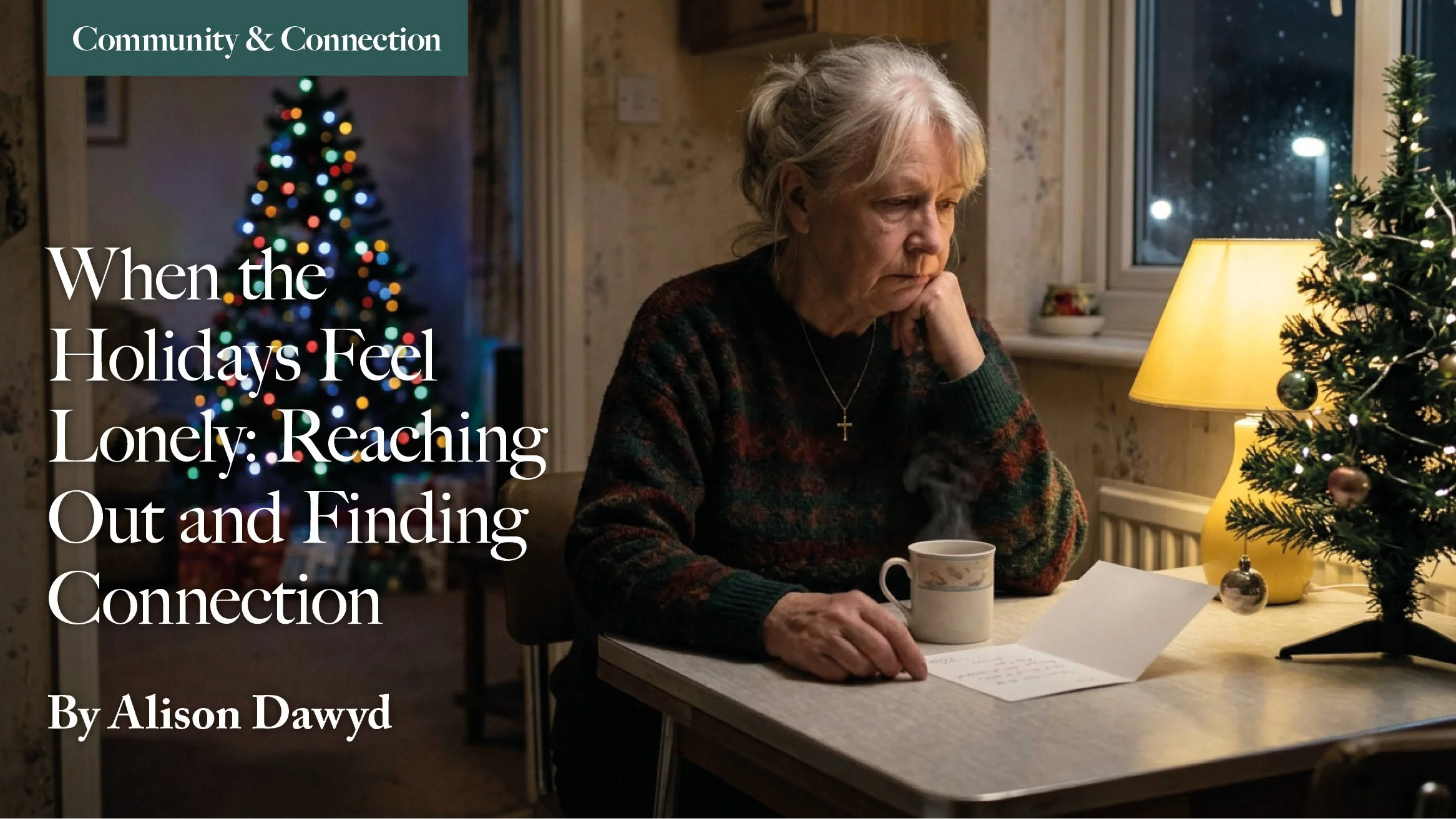
The holidays are often described as the most wonderful time of the year, filled with traditions, celebrations, and time with loved ones. Yet the season can feel deeply lonely and isolating for those caring for a spouse or loved one living with dementia and for older adults who are spending it alone.
Grieving What Has Changed
In my work as a Recreation Therapist, I have often heard caregivers say, “My spouse is still here, but they aren’t the person they used to be.” During the holidays, a loved one may sit beside you at dinner, yet the relationship feels different: conversations are harder, traditions may no longer be possible, and the person with whom you share years of memories may participate differently.
The holidays can magnify grief over gradual changes in a loved one and the loss of cherished traditions, routines, and expectations. Even when circumstances have changed, people may still feel pressure to make the holidays look as they always have.
I often tell caregivers that it is okay to grieve, miss how things used to be, and feel sad when a favourite tradition looks different. Acknowledging these losses does not diminish your love for the person in front of you; it can create space to appreciate the moments that still exist.
Connection Over Perfection
I encourage families to focus less on perfection and more on connection. Holidays can remain meaningful even when they no longer look as they did 10 years ago. Connection may be found in small moments like sharing a favourite treat, listening to familiar music, looking through old photographs, or sitting quietly together over coffee. These moments differ from past celebrations, but they still matter.
I also encourage caregivers to meet their loved one where they are today rather than expecting them to be the person they once were. This shift can be difficult, but it often creates opportunities for meaningful connection in new ways.
Remember Those Who May Be Alone
This message also matters for friends and neighbours. When someone develops dementia, experiences cognitive changes, loses a loved one, or lives alone, people may unintentionally pull away because they feel uncomfortable or unsure what to say. Visits and invitations then become less frequent, often when connection matters most.
Your friend may not remember every detail or participate as they once did, but they still deserve friendship, kindness, and inclusion. A visit, phone call, coffee date, or holiday invitation can sustain a sense of belonging. Focus on the person who is still there, not on what has changed.
Reaching Out Matters
For caregivers and older adults who spend more time alone, intentional connection is especially important. If you know someone who may be alone, reach out with a specific offer: share coffee, make a phone call, provide a ride, or invite them to a community event. A brief, thoughtful connection can remind someone that they have not been forgotten.
Many are navigating changing relationships, caregiving responsibilities, health challenges, or the loss of comforting traditions. This holiday season, honour what has changed while remaining open to new ways of connecting. Notice who may be spending the holidays alone, and offer a call, visit, or invitation. It is okay to grieve; meaningful moments are rarely perfect, but they can help us feel seen, supported, remembered, and connected.

Alison Dawyd
Alison Dawyd, BSc, BARST, RecT, is a Manager at ElderCare providing wellness day programs to dependent adults living in the community. With nearly 20 years of experience as a Recreation Therapist in rehabilitation, care, and day program settings, Alison is passionate about helping older adults stay active, connected, and engaged in the activities that bring them joy. Outside of work, Alison is a mom to four daughters and although she doesn’t play sports herself, she spends countless hours driving them to theirs.