

Tax Season Scams: What Every Albertan Should Know
By Julie Matthews
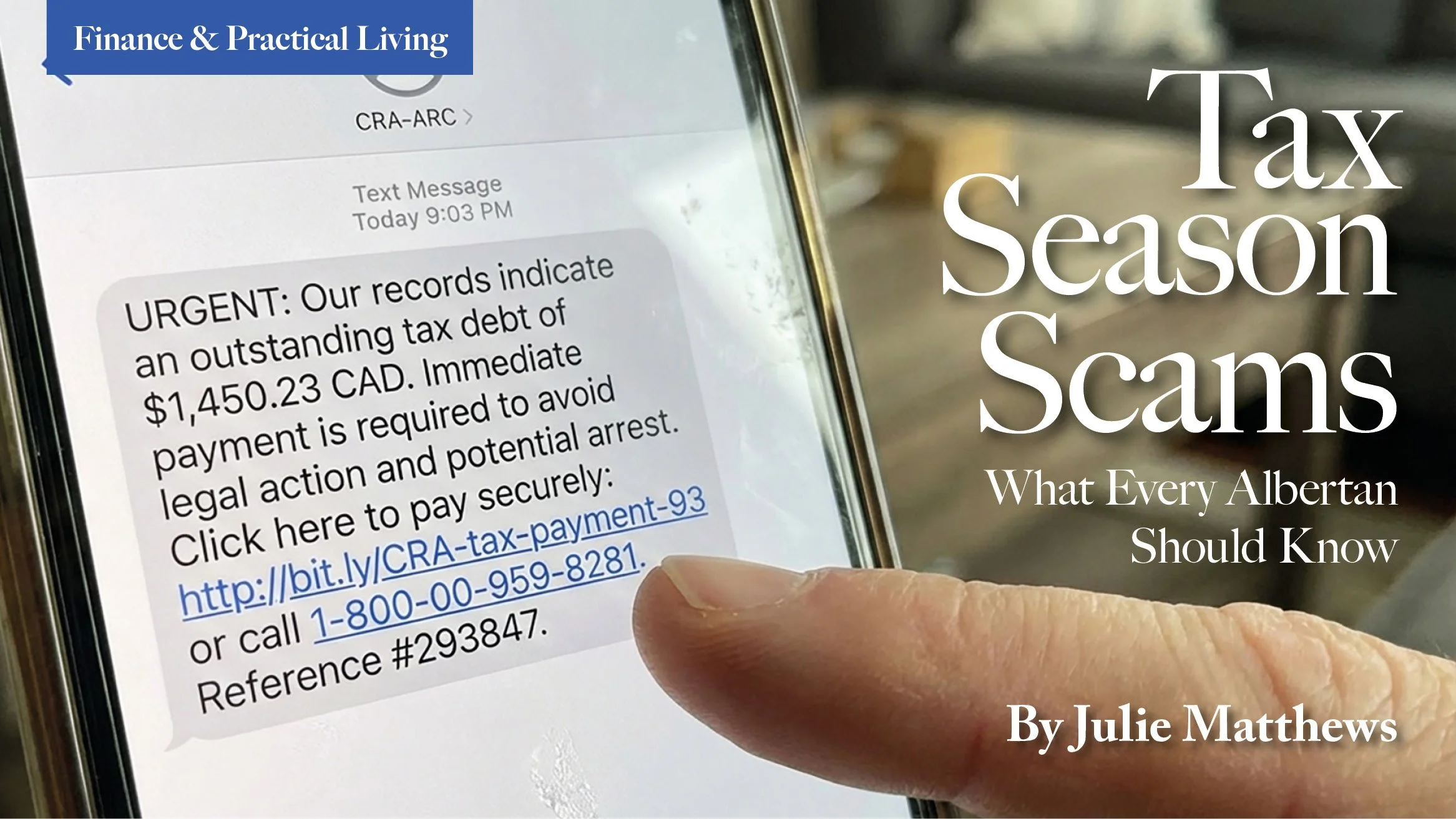
It starts small. One day you receive a text, email, or phone call claiming to be from the Canada Revenue Agency. The message may say there’s a problem with your tax return. It may say that you owe money, or maybe that you’re entitled to a refund. The words and the voice are convincing, sometimes even scary. They may use words like “act now”. They may threaten you with extra penalties or even arrest.
Emails and texts may include official logos, legitimate names and reference numbers. At first glance, it feels legitimate. That’s exactly what fraudsters are counting on. You are communicating with a scammer.
Fraud is a huge and evolving problem in Canada. From January 1 to September 30, 2025, Canadians reported $554-million in losses to the Canadian Anti-Fraud Centre. That are only the reported losses. Many victims of scams never report it, often out of embarrassment and shame.
Every tax season, Canadians lose millions of dollars to scams designed to impersonate trusted government agencies and financial institutions. In Alberta, these scams often surge between February and April, when tax filing is top of mind and communication from legitimate organizations increases. Fraudsters take advantage of this timing, knowing their messages are less likely to seem suspicious.
Tax season scams can be especially effective with Canadians over the age of 55 because fraudsters rely on trust and a sense of responsibility. Many people in this age group have spent decades filing their taxes properly and responding promptly to official requests. They are responsible rule followers. Scammers exploit that instinct to comply and will create messages that sound both urgent and authoritative.
Their goal often is to also trigger an emotional reaction. They exploit our emotions. It may be concern about owing money, fear of penalties, or excitement about receiving a refund. When emotions take over, many people tend to act quickly without stopping to verify the source.
It can only take seconds to get caught up in one of these scams. Many of the emails and text messages may contain a link the fraudsters want you to click. Clicking that link may redirect you to a fake website of an agency you trust where you are asked to enter your information. Clicking the link or an attachment may also download malware (malicious software) like spyware, keyloggers and more onto your device, potentially allowing criminals to steal what they want from your device.
Spyware secretly monitors your activity and collects information such as passwords, banking details, and CRA login credentials. A keylogger is a type of spyware that records everything you type as you type it. Think about it. If this has been secretly downloaded onto your computer, they are capturing every key you touch, and in what order.
How AI and Technology Help Scammers
You can’t trust your call display. Fraudsters can use “spoofing” technology to manipulate caller ID, so your phone displays any name or number they want. When they call you, the caller ID could say “Canada Revenue Agency”, “police” or appear as a local well-known Alberta phone number. They hope by doing this you will be more likely to answer the phone, and believe you are talking to that legitimate and trusted agency.
Artificial Intelligence (AI) is also supercharging scams and giving fraudsters an edge. Scammers now use AI tools to generate emails and texts that mimic the tone, grammar, and structure of official government communications.
AI also helps scammers quickly gather and analyze information from social media, public records, and data breaches. It then helps fraudsters draft targeted messages that are specifically designed for your location, age group and more. The more specific and personalized the message feels, the more likely you are to believe it.
This technology also allows scammers to write and send those convincing messages more quickly. They can test different email, text and phone scripts and then analyze which ones are the most successful in what areas and adjust accordingly. AI can also swiftly design convincing fake tax-related websites pretending to be the Canada Revenue Agency, well-known accounting firms or other tax preparer agencies. If you log in and enter your personal or financial information, you will be giving it straight to the fraudsters and may not realize until it’s too late.
No one enjoys completing tax documents. Many people go online searching for help with their tax filings. This can make them an easy target if they stumble onto a fake website.
Fraudsters take advantage of vulnerabilities. They may offer a great deal on tax filing, or create an ad or post that focuses in detail on helping people who struggle with their taxes. In some cases, they may actually complete your taxes for you, but the refund goes directly into their pocket. And now they have all your information as well, and identity theft can be a big concern.
How to Protect Yourself
• Remember, the CRA and government agencies will not pressure you. Canada Revenue Agency does not threaten arrest, demand immediate payment, or pressure you to act now.
• Know how the CRA contacts Canadians. CRA usually contacts you by mail or with a message inside your My CRA online account. You will never be asked to pay in gift cards, cryptocurrency or by e-transfer.
• Never click links in unexpected messages. Watch for wording like “You have a refund waiting”, “Your account has been flagged,” or “Click here to confirm your information.”
• Protect your Social Insurance Number. (SIN) It is the key to your identity. Scammers use it to steal refunds or file fraudulent returns.
• Be wary of refunds that seem too good to be true
• File early to reduce risk. This reduces the time for identity thieves to file fraudulently on your behalf.
• Protect your My CRA Account. Use strong, long and unique passwords.
• Beware of unsolicited help with taxes.
• Trust your instincts and slow down.
About the Author

Julie Matthews
Julie Matthews provides dynamic fraud prevention presentations across Western Canada to seniors, businesses and communities. Before starting her own business, Julie was an Investigative TV reporter for 19 years and an investigator with the Government of Alberta’s Consumer Investigations Unit. She is a certified fraud examiner and has the popular weekly segment “Scam Alert” on 840 CFCW radio. For more information or to book Julie, visit her website www.juliematthews.ca.