

Comfort Food, Lightened Up: A Cozy Winter Guide to Soups, Stews, and Casseroles
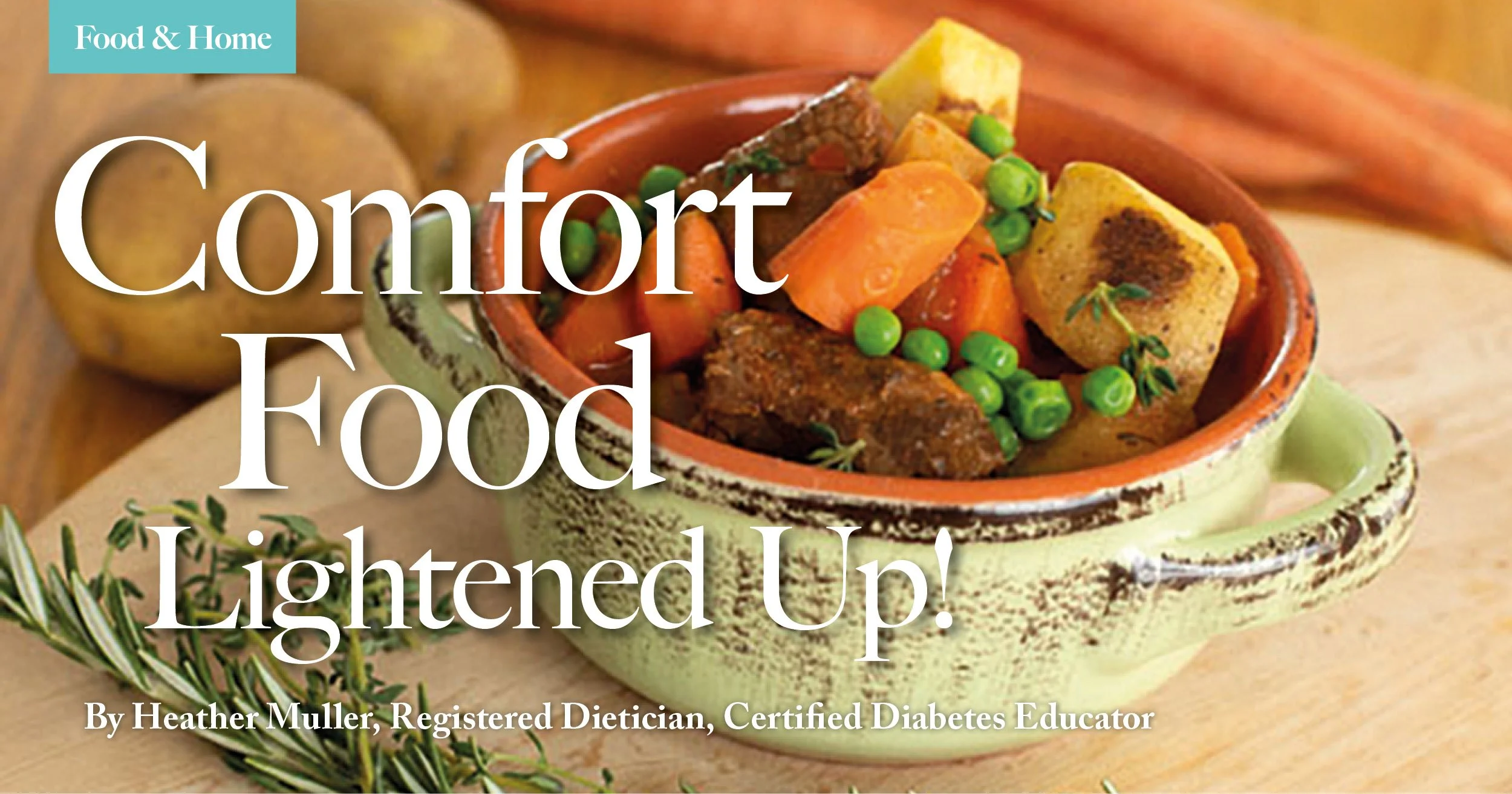
By Heather Muller, Registered Dietician, Certified Diabetes Educator
When the temperature drops and daylight fades, we naturally crave something warm and familiar. There is nothing quite like wrapping your hands around a steaming bowl and savouring flavours that feel like home. But comfort does not have to mean heavy. With a few smart choices, you can enjoy all the cozy goodness while nourishing your body and maintaining steady energy levels.
This guide shares simple strategies to make winter favourites lighter and more wholesome without losing the flavours you love. We focus on soups, stews, and casseroles, offering practical ideas to boost nutrition, reduce excess salt and fat, and keep every bite satisfying.
Why We Crave Comfort in Winter
Cold weather and shorter days often lead us toward heartier meals. These dishes connect us to family traditions and shared memories, but classic versions can rely too heavily on salt, cream, or refined grains, which may leave you feeling weighed down.
Lightening up is not about restriction. It is about adding more colour, texture, and nourishment. Think lean proteins, vibrant vegetables, and whole grains. It is comfort food with benefits.
Soups That Warm Without Weighing You Down
Homemade soup is pure winter magic. It is easy, forgiving, and perfect for leftovers. Build a balanced bowl with protein, whole grains or starchy vegetables, and plenty of non-starchy vegetables. Keep broth flavourful but moderate in sodium and rely on seasoning layers to build depth.
If you love noodles, choose whole wheat noodles or try barley for extra fibre and hearty texture.
Cook grains or pasta separately until just al dente, then stir them in at the end. This keeps the broth clear, the texture ideal, and the soup light rather than starchy.
Stews That Stay Hearty and Balanced
Stews offer depth, warmth, and comfort. Start by browning aromatics and proteins to develop a rich base. Use low-sodium broth, and finish with a splash of acidity to keep flavours lively.
Plant-forward stews shine with lentils and barley, which bring protein, fibre, and satisfying chew. Add plenty of carrots, celery, mushrooms, and greens. When using meat, opt for lean cuts and trim away visible fat. Simmer until tender, then finish with fresh herbs for brightness.
Casseroles That Comfort and Nourish
Casseroles are winter’s warm hug. To lighten them up, begin by rethinking the classic pasta–sauce–cheese formula.
Start with whole-grain pasta or brown rice.
Build a sauce with sautéed onions, garlic, tomatoes, and greens.
Add lean protein such as shredded chicken, turkey, or beans.
For a lighter, cheesy finish, grate part-skim cheese finely and sprinkle it on top for a golden crust. Off the heat, stir in Greek yogurt for smooth, creamy richness.
Serve with a crisp salad or steamed greens for a balanced meal.
Simple Swaps You Can Do Today
Once you have mastered the basics of soups, stews, and casseroles, these easy swaps help you boost nutrition and flavour without adding heaviness.
Boost Flavour Without Extra Salt
Start aromatics early: Garlic, onions, celery, and carrots build a strong flavour base and add antioxidants that support immune health.
Brighten at the end with lemon or lime: Citrus adds freshness and vitamin C, which supports immunity and iron absorption.
Add tang with vinegar: Apple cider or balsamic vinegar lifts and balances flavours without adding sodium.
Finish with fresh herbs: Parsley and cilantro add brightness along with vitamins A, C, and K.
Add warmth with chilli flakes or smoked paprika: These spices deepen flavour without salt and provide antioxidants like capsaicin.
Choose Lean Proteins
Swap chicken thighs for skinless chicken breasts: Lowers saturated fat while keeping protein high for steady energy.
Use ground turkey instead of regular ground beef: A leaner option that supports heart health.
Add beans or lentils for extra protein and fibre: These plant proteins increase fullness, stabilize blood sugar, and provide iron and B vitamins.
Mix lentils into ground meat dishes: Combining half meat and half lentils boosts fibre, reduces saturated fat, and makes meals more budget-friendly.
Pile On Vegetables
Load up the vegetables: Double the carrots and celery and add mushrooms for umami and B vitamins. Mix in colourful options like bell peppers, zucchini, peas, green beans, or leafy greens.
Brighter vegetables often contain more antioxidants and micronutrients, and adding a variety boosts fibre, texture, and flavour.
Stir in spinach or kale just before serving for iron, folate, and vitamin K.
Keep frozen vegetables ready, so it is easy to boost nutrition at any time.
Switch to Whole Grains
Replace white pasta with whole wheat noodles: Increases fibre for better digestion and longer-lasting fullness.
Add cooked barley or brown rice to soups: These grains support heart health and add minerals like magnesium and selenium.
Use the 5 percent / 15 percent rule: When reading the Nutrition Facts label on any packaged ingredient, aim for sodium and saturated fat under 5 percent Daily Value (DV), and fibre over 15 percent DV whenever possible.
Smart Dairy Swaps
Use Greek yogurt instead of cream: Adds protein and probiotics while reducing saturated fat.
Grate part-skim cheese finely: Helps with portion control while still giving satisfying flavour.
Add 2 to 4 tbsp nutritional yeast: Offers a savoury, cheesy taste plus B vitamins, including B12 in fortified varieties.
Cook Once, Eat Twice
Make a double batch of soup and freeze single portions: Saves time and ensures balanced meals are ready for busy days.
Bake two casseroles and freeze one: Reduces midweek stress and helps avoid less nutritious last-minute meals.
Ready to Cook?
Comfort food can be light, flavourful, and nourishing. This winter, choose dishes that warm you from the inside out and help you feel your best. Use these strategies to customize any dish to your taste and nutrition goals. Need inspiration? We have included recipes from My Viva Plan, created by our team of health care professionals, including registered dietitians and chefs, to help you get started. Let this season be your invitation to cook with confidence, eat with joy, and savour every cozy moment.
About the Author

Heather Muller, Registered Dietician, Certified Diabetes Educator
Heather Muller is part of the Revive Wellness Team. Revive Wellness is home to a diverse group of registered dietitians who provide evidence-based, personalized nutrition support to individuals across Alberta. To learn more about the team, visit revivewellness.ca/our-team/our-dietitians/ or book a discovery call at revivewellness.ca/discovery-call-booking-page/.
Bison Stew
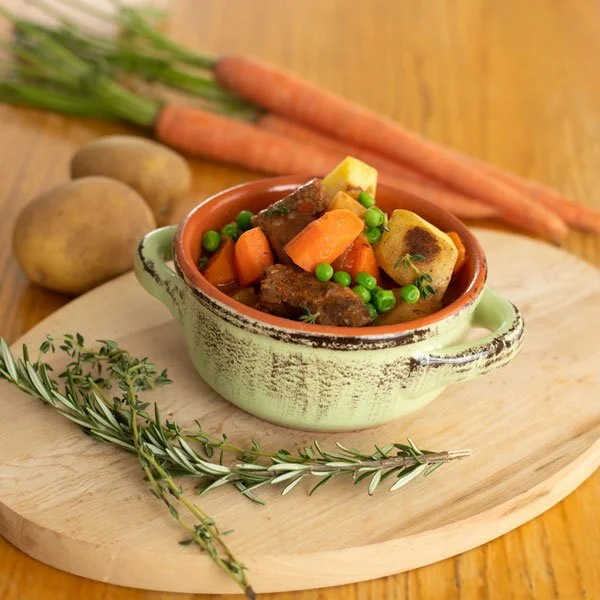
Bison Stew
Serves 6 (1.5 cups per serving)
Ingredients
2 tbsp flour
2 tsp salt
1 tsp black pepper
1 lb (454 g) bison roast, cut into 1½-inch pieces
2 tbsp canola oil, divided
1 cup chopped onion
1 cup diced carrot
1 cup diced celery
5 cups low-sodium beef broth
1 tbsp tomato paste
2 tsp dried thyme
2 tsp dried oregano
2 bay leaves
2 tsp dried rosemary
2 tbsp fresh chopped parsley
1½ cups diced yellow potatoes
1 cup frozen green peas
Preparation
1. In a large bowl, whisk together flour, salt and pepper. Add bison and toss gently
to coat.
2. Heat 1 tbsp oil in a large frypan over medium-high heat. Shake off excess flour
from bison and add meat to pan in a single layer (work in batches if necessary).
3. Cook until meat is well browned, about 3 – 4 minutes per side. Remove from
heat and transfer browned meat to a slow cooker.
4. Heat remaining 1 tbsp oil in same frypan over medium heat. Add onions, carrots
and celery and cook, stirring frequently, until slightly softened and beginning to
caramelize, about 5 minutes. Add 1 tbsp water to pan and stir, gently scraping
the bottom of the pan to loosen any browned bits. Remove from heat and
transfer vegetables to slow cooker.
5. Add remaining ingredients (except peas) to slow cooker and stir to combine.
6. Cook on low heat for 8 hours or high heat for 4 hours.
7. Stir in peas and cook just until heated through, about 5 minutes. Remove bay
leaves and discard.
8. Serve and enjoy!
Nutritional analysis per serving: 221 calories, 7 g fat, 22 g protein, 18 g carbohydrate
(14 g available carbohydrate), 4 g fibre, 682 mg sodium
Plate portions: 3 proteins, 1 vegetable
Zucchini and Turkey Enchiladas
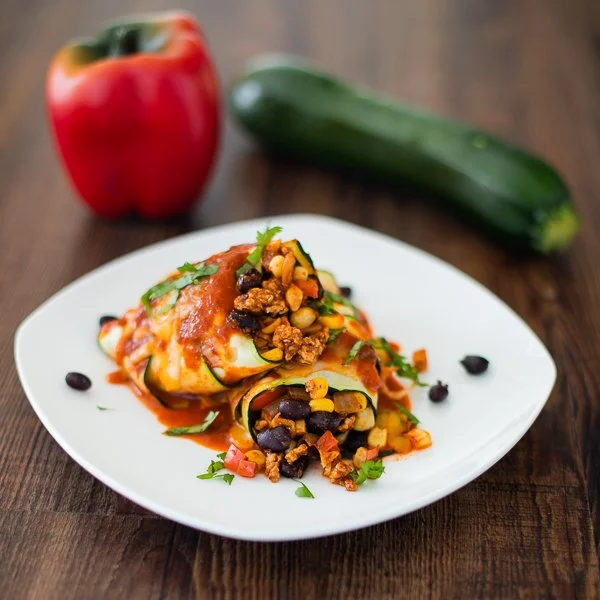
Zucchini and Turkey Enchiladas
Makes 6 servings (2 enchiladas per serving)
Ingredients
2 tsp vegetable oil
1 lb. lean ground turkey
½ cup diced onion
1 cup diced red bell pepper
3 cloves minced garlic
1 tsp cumin
2 tsp chili powder
2 tsp dried oregano
1½ cups red enchilada sauce, divided
1 can (540 mL/19 oz) no-salt-added black beans, drained and rinsed
½ cup frozen corn, thawed
4 large zucchini
1 cup shredded Monterey Jack cheese
Preparation
1. Preheat oven to 350°F.
2. Heat oil in a large fry pan over medium heat. Add turkey and cook, stirring, until
almost cooked through, about 3 - 4 minutes.
3. Add onions, peppers and garlic. Cook, stirring occasionally until turkey is
thoroughly cooked and vegetables have softened, about 5 minutes. Add cumin,
chili powder and oregano and cook for 2 minutes.
4. Stir in 1 cup enchilada sauce, black beans and corn. Remove from heat and set
aside.
5. Using a Y peeler or a mandolin, slice zucchini lengthwise into thin strips.
6. Lay three zucchini slices on a flat surface, overlapping slightly. Add ¼ cup turkey
filling and gently roll up the zucchini to enclose the filling. Transfer to a baking
dish. Repeat with remaining zucchini and turkey filling.
7. Spread the remaining ½ cup of enchilada sauce over the zucchini rolls and
sprinkle with cheese.
8. Bake until zucchini is tender and filling is heated through, about 20 minutes.
Garnish with Greek yogurt or sour cream and cilantro.
9. Serve and enjoy!
Nutritional analysis per serving: 297 calories, 11 g fat, 31 g protein, 22 g
carbohydrate (16 g available carbohydrate), 6 g fibre, 502 mg sodium
Plate portions: 1 grain, 3 proteins, 2 vegetables, 1 fat
Turkey and Spinach Lasagna
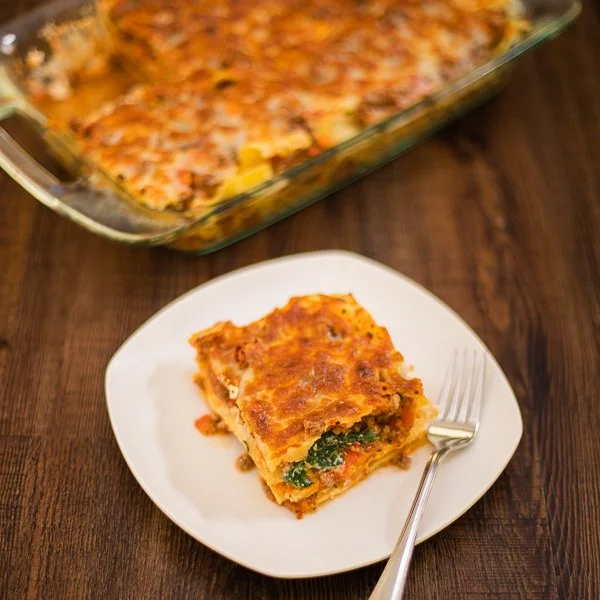
Turkey and Spinach Lasagna
Makes 9 servings (1 slice per serving)
Ingredients
2 tsp canola oil
1 lb. lean ground turkey
1 cup diced onion
1 cup diced carrots
1 cup diced celery
1 cup diced red bell peppers
3 cloves minced garlic
1 tbsp dried oregano
1 tbsp dried basil
¼ tsp salt
½ tsp fresh ground pepper
¼ tsp granulated sugar
1 can (796 mL/28 oz) crushed tomatoes
1 tsp canola oil
6 cups loosely packed fresh spinach
1 cup ricotta cheese
12 lasagna noodles
¾ cup shredded mozzarella cheese
Preparation
1. Preheat oven to 350°F.
2. Heat 2 tsp oil in a medium pot over medium heat. Add turkey and cook, breaking
up with a spatula, until no longer pink.
3. Add onions, carrots and celery and cook until softened, about 5 minutes.
4. Add bell peppers, garlic, oregano, basil, salt, pepper and sugar. Cook, stirring, for
2 minutes.
5. Add crushed tomatoes and bring to a simmer. Reduce the heat to medium-low
and simmer until slightly thickened, about 15 - 20 minutes.
6. Meanwhile, heat 1 tsp oil in a fry pan over medium heat. Add spinach and cook,
stirring, until wilted, about 2 - 3 minutes. Remove from heat and set aside to cool
completely.
7. Add cooled spinach to ricotta and stir to combine. Set aside.
8. Cook lasagna noodles according to package directions. Drain and rinse with cold
water to prevent sticking.
9. Spread a thin layer of sauce in the bottom of a lightly greased 9 x 13-inch baking
pan. Place 3 noodles on top. Spread with half of the ricotta mixture.
10. Top with 3 noodles. Spread half of the tomato sauce.
11. Top with 3 noodles. Spread the remaining half of the ricotta mixture evenly.
12. Top with 3 noodles. Spread the remaining half of the tomato sauce.
13. Sprinkle with mozzarella and cover the pan with aluminum foil.
14. Bake, covered, for 30 minutes, then remove foil and continue cooking until
cheese is melted and top is lightly browned, about 15 minutes.
15. Serve and enjoy!
Nutritional analysis per serving: 319 calories, 8 g fat, 25 g protein, 38 g carbohydrate
(33 g available carbohydrate), 5 g fibre, 309 mg sodium
Plate portions: 2 grains, 3 proteins, 2 vegetables, 1 fat
Chicken and Barley Soup
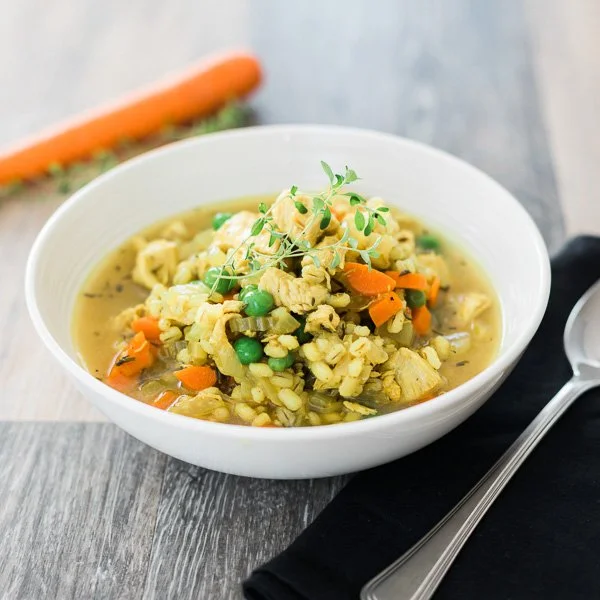
Chicken and Barley Soup
Makes 6 servings (1½ cups per serving)
Ingredients
1 tbsp canola oil
3 boneless skinless chicken breasts (about 225 g/8 oz each), cubed
1 cup diced onion
1 cup diced carrots
1 cup diced celery
2 cloves minced garlic
1 tbsp minced fresh ginger
1 tbsp ground turmeric
6 cups low-sodium chicken broth
1 tbsp dried thyme
1 tbsp dried rosemary
1 tsp pepper
1 cup pearl barley, uncooked
½ cup frozen peas
Preparation
1. Heat oil in a pot over medium-high heat.
2. Add chicken and cook for 8 minutes.
3. Add onions and cook until softened, about 5 minutes.
4. Add carrots, celery, garlic, ginger and turmeric. Cook until vegetables begin to
soften, about 5 minutes.
5. Add broth, thyme, rosemary and pepper. Bring to a boil and cook until the
carrots and celery are almost tender, about 5 minutes.
6. Add barley and cook until tender, about 10 minutes.
7. Remove from heat and add peas. Cover and let sit for 5 minutes.
8. Serve and enjoy!
Nutritional analysis per serving: 282 calories, 7 g fat, 30 g protein, 24 g carbohydrate
(19 g available carbohydrate), 5 g fibre, 250 mg sodium
Plate portions: 1 grain, 4 proteins, 1 vegetable
Slow Cooker Recipe
Makes 10 servings (1½ cups per serving)
Ingredients
1½ lb (680 g/24 oz) lean stew meat, cut into 1-inch cubes
2 (8 oz.) containers mushrooms, thinly sliced
1 can (284 mL/9.5 oz) condensed low-sodium cream of mushroom soup
1 small onion, diced
¾ cup low-sodium beef broth
3 tbsp Worcestershire sauce
2 cloves minced garlic
1 tsp black pepper
½ tsp. salt
10 oz (285 g) whole wheat noodles, dry
1 cup non-fat plain Greek yogurt
2 tbsp fresh chopped parsley
Preparation
1. Place the stew meat, mushrooms, cream of mushroom soup, onion, beef broth,
Worcestershire sauce, garlic, black pepper and salt in a slow cooker. Stir to
combine.
2. Cook on high for 3 hours or on low for 6 hours.
3. Around 30 minutes before the slow cooker is done, cook noodles in a large pot
according to package directions until al dente. Drain.
4. Add noodles and Greek yogurt to the slow cooker and stir to combine. Turn off
the slow cooker and add parsley to garnish.
5. Serve and enjoy!
Nutritional analysis per serving: 274 calories, 5 g fat, 27 g protein, 30 g carbohydrate (25 g available carbohydrate), 5 g fibre, 352 mg sodium
Plate portions: 2 grains, 3 proteins, 1 vegetable, 1 fat