A conversation about living, dying, preparation, presence, and the courage to talk about it all.
By Kerri Leland
Death isn’t something most of us are particularly comfortable talking about. We tend to put those conversations off, telling ourselves there’s plenty of time to think about them later. But after speaking with Beverley Shiels, a Registered End-of-Life Doula and the founder of Courageous Goodbyes® in St. Albert, I found myself thinking about the subject a little differently.
Beverley’s work isn’t simply about dying; it’s about living, too. She helps individuals and families navigate the practical and emotional realities of end-of-life, while creating space for the conversations, questions and decisions that can be so difficult to face on our own. In our conversation, we talked about why preparing for the end of life can be a gift to the people we love, what we can learn from those who are dying, and why having these conversations sooner rather than later can help us live more intentionally. I hope you’ll find Beverley’s perspective as thoughtful and meaningful as I did.
KL: Beverley, people may hear the terms End-of-Life Doula and Death Doula. What does that role mean to you, and why does End-of-Life Doula resonate more with the work you do?
BS: At its heart, an End-of-Life Doula is a companion, guide and coach who is comfortable in the space of illness, dying, death and mourning. I walk alongside the person who is dying and the people who love them, helping them find clarity, understand their options, ask difficult questions and feel more empowered during an experience that can be overwhelming and, at times, very lonely.
Both terms are valid, but I prefer End-of-Life Doula because, for me, it speaks to the whole experience. Dying and death are part of it, but so is living.
Sometimes it’s the person who is dying who reaches out to me. More often, it’s a struggling caregiver or family member. Medical teams are there to support the medical experience, and that care is essential. My role is to support the human experience. That might mean helping a family prepare and get organized, facilitating conversations, helping them understand what may be happening, or simply being a reassuring and consistent presence at their side.
I can’t change the outcome or make dying easy. Nothing can do that. But my presence can help make the experience more bearable and less overwhelming. It’s their journey, and I accompany them through it so they and the people they love don’t have to navigate it alone.
KL: Was becoming an End-of-Life Doula something you always knew you wanted to do?
BS: It was a calling long before I knew there was a name for it.
In my personal life, I have not experienced a lot of death. But I remember the kindness of the professionals who were there and thought, if I ever had the opportunity, I would like to be that kind of support for someone else.
Long before I took an early retirement, I had begun contemplating what I wanted that stage of my life to look like. I knew I wanted to do something meaningful and purposeful, and I wanted to prepare for that next chapter rather than wait for retirement to arrive. I thought I had come up with something unique, but I had no idea what to call it or how to go about it.
Then, after trying to explain it to someone, they said, “It sounds like you want to be a Death Doula.” Suddenly, what I had been envisioning had a name. I had something I could move forward with. A vision, training, experience, and eventually, the creation of Courageous Goodbyes®.
What surprised me later was discovering that my great-grandmother and my aunt had both been that person for others in their communities, long before I understood the significance of what they were doing. So perhaps this calling really is in my DNA.
KL: Death is something everyone of us will experience, yet so many of us struggle even to talk about it. What do you think we’re afraid of?
BS: I think it varies from person to person. Some feel that talking about death will somehow manifest it, as though avoiding the subject might keep it at a distance.
Death can be uncomfortable to contemplate because it means facing loss and the emotional pain that comes with it. Who wants to think about no longer being here and life carrying on without us? And when it’s someone we love, we face another difficult question. What will my life look like, and how will I cope without them?
So we put it off. We don’t want to be morbid or pessimistic. After all, there are still years of life ahead of us! Yet I’ve noticed something interesting. When people finally have the opportunity to speak openly with someone who is comfortable with death, there is often a relaxed exhale, and they begin to embrace the conversation.
As an End-of-Life Doula, I’m not there to give someone their answers. I’m there to create space for curiosity and exploration, where even the uncomfortable questions are welcome. Sometimes simply expressing what frightens us makes the unknown feel a little less overwhelming and helps people discover what is true for themselves.
KL: You’ve sat beside families who knew what their loved one wanted—and families who had no idea. What difference does having those conversations beforehand actually make?
BS: When a family has had these conversations, there is a different kind of understanding in the room. The sadness and fear may still be there, but they have the reassurance of already knowing what their loved one wanted.
They’ve heard directly from them what matters, what they would or wouldn’t want and, just as importantly, why. So when difficult decisions arise, particularly those that fall into the grey areas, they have something to draw from. What did Mom tell us? What mattered to her?
That’s why I believe talking together is every bit as important as documenting our wishes. No document can anticipate every circumstance. Those conversations give context to the choices we’ve put on paper.
Preparation doesn’t take away grief or give us complete control over death. But it can give the people we love greater confidence that they’re honouring our wishes, without the additional burden of having to guess. I’ve seen how having the practicalities mapped out can give families more space to simply be present with the person they love and, when the time comes, begin to grieve without guilt.
KL: If the best time to have these conversations is before a crisis, what does preparing actually look like, and does it ever really become “finished”?
BS: The best time is when you’re healthy. That’s when you have time to think, explore, and consider the what-ifs without the pressure of an immediate decision. It’s not morbid. It’s practical.
And preparing doesn’t mean deciding everything once and never changing your mind. End-of-life planning is a living process. You may divorce, move, retire somewhere new, or lose a spouse. Relationships evolve. Medicine advances and new options become available. You change too.
So remain curious. Learn what’s available. Explore your choices. Ask questions. Visit a funeral home or cemetery before you need one. Something may resonate with you today that didn’t exist, or simply didn’t interest you, ten years ago.
We revisit our financial plans as our circumstances evolve. Why wouldn’t we revisit our end-of-life plans?
And include the people who may one day need to know: parents, partners, and adult children. We know too well that terminal illness isn’t restricted to old age.
Your plans don’t have to be perfect, and they don’t have to be finished. They just need to begin.
KL: Many people hear “End-of-Life Doula” and assume your work must be centred on death. What might surprise them about the way you actually support people?
BS: Probably that so much of my work is about living.
End-of-Life Doulas are non-medical. We don’t replace doctors, nurses, healthcare aides, or other end-of-life professionals. We don’t provide medical treatment or personal care, and while we don’t administer Medical Assistance in Dying, we do support an individual and their family through that experience.
The Doula role is different. It’s relational. We’re emotionally present with the individual and the people they love. Sometimes we’re a bridge between the medical and human experiences, helping families formulate questions, asking healthcare professionals to explain unfamiliar language, and helping everyone better understand what is happening.
We may liaise with a funeral home, help people prepare and organize, provide caregiver respite, and be present during the dying time. That emotional presence continues as family members begin to step into their grief.
But underneath all of that, there is still a person and a family living the rest of their life together. So I might ask them, what does the best possible day look like for you today?
It may look very different from six months ago. It could be something incredibly simple that brings a little joy to create a happy memory. There is still time for meaning, connection, laughter, and love.
Yes, Doulas are comfortable with death. But we’re very much about life.
KL: Walking alongside people who know their lives are coming to an end must change the way you see your own. What have they taught you about living?
BS: One woman I supported taught me something I will carry for the rest of my life. She spent about a year preparing for her death, thinking about every member of her family and attending to the smallest details. As we explored different possibilities together, she remained curious and gave herself permission to change her mind along the way. It wasn’t about getting death “right.” It was about discovering what felt true for her.
She taught me that preparing for our own death can actually become a gift of life to the people we love and leave behind. It doesn’t take away their grief. Nothing can. But her preparation went beyond making her wishes known. The people she loved could also see how much thought she had given to them and how deeply they mattered to her. There can be reassurance in knowing that the important things were said and preparations were made.
This work has also taught me about balance. We work hard, raise children, help parents, make ends meet, and rush from one responsibility to another. Eventually, I think we begin to ask ourselves: What actually makes me happy? What really matters? Why am I doing this?
For me, the answer has been to re-prioritize. I’ve learned to simplify my schedule, be more minimalistic with my possessions because I’m tired of dusting them, spend quality time with the people I love and, most importantly, be truly present when we’re together.
There is courage in preparing for death. There is also courage in living fully while we’re here.
KL: For the person reading this who knows there are conversations they need to have—but keeps putting them off—what would you want to leave them with?
BS: Don’t wait until you know exactly what to say. Be honest. You can simply say, “There’s something important I really want to talk to you about. I’m uncomfortable talking about it, and honestly, I don’t really know where to begin.” Guess what? That’s your beginning!
You don’t need a formal family meeting. It can be an impromptu chat over coffee or dinner. Mention something you’ve been reading or thinking about and make it a two-way conversation. Give everyone the opportunity to express themselves: “This is what I’ve been thinking. What do you think? Have you ever thought about what you would want?”
You don’t have to accomplish everything at once. It’s a conversation, not a plan. Well, not yet.
And when the time does come to say goodbye, say what matters, and say it with love. Perhaps one of the greatest gifts we can leave the people we love is permission to keep living fully. To be happy. To laugh again. And, if life brings it, to love again.
That, to me, is a Courageous Goodbye.
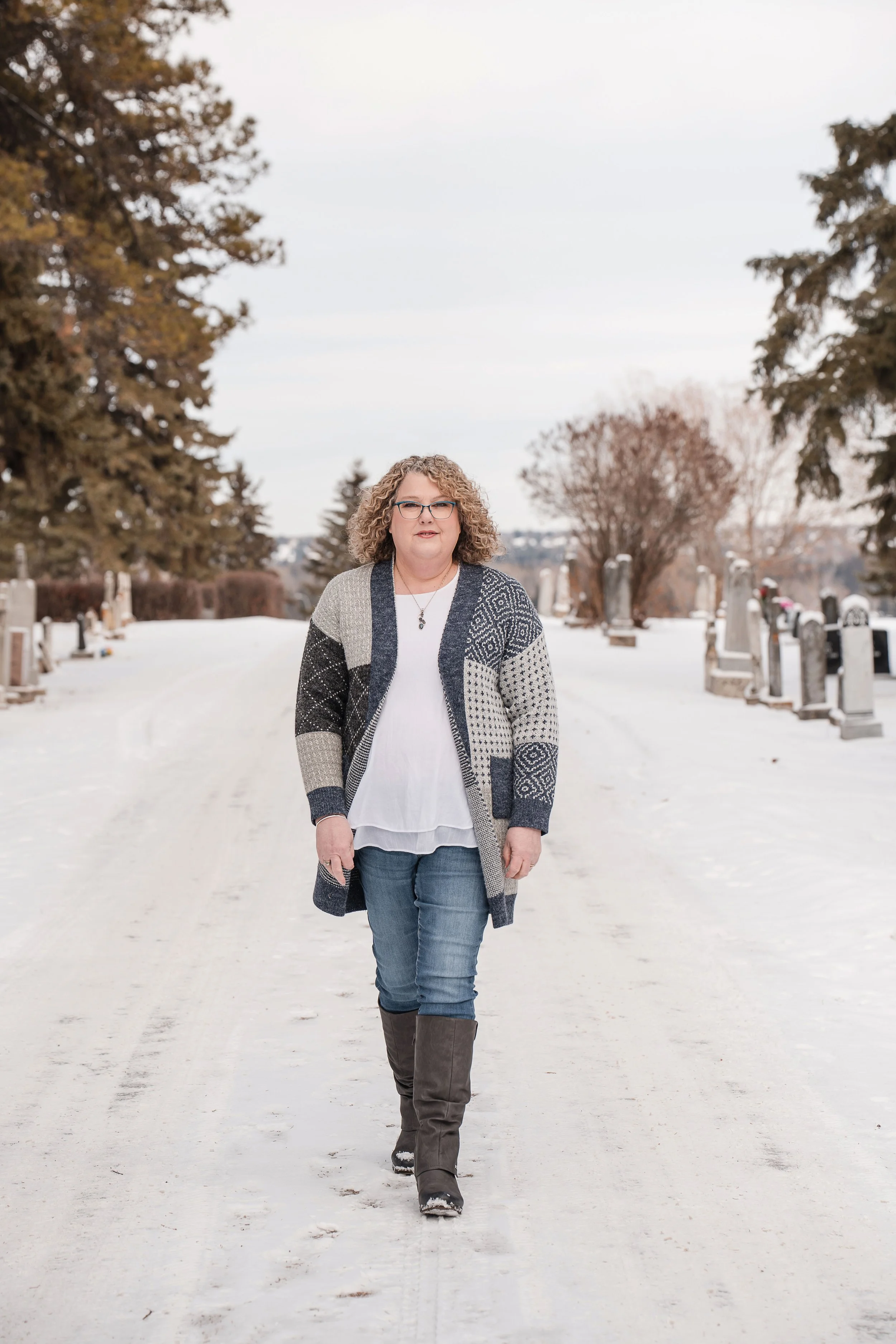
Beverley Shiels
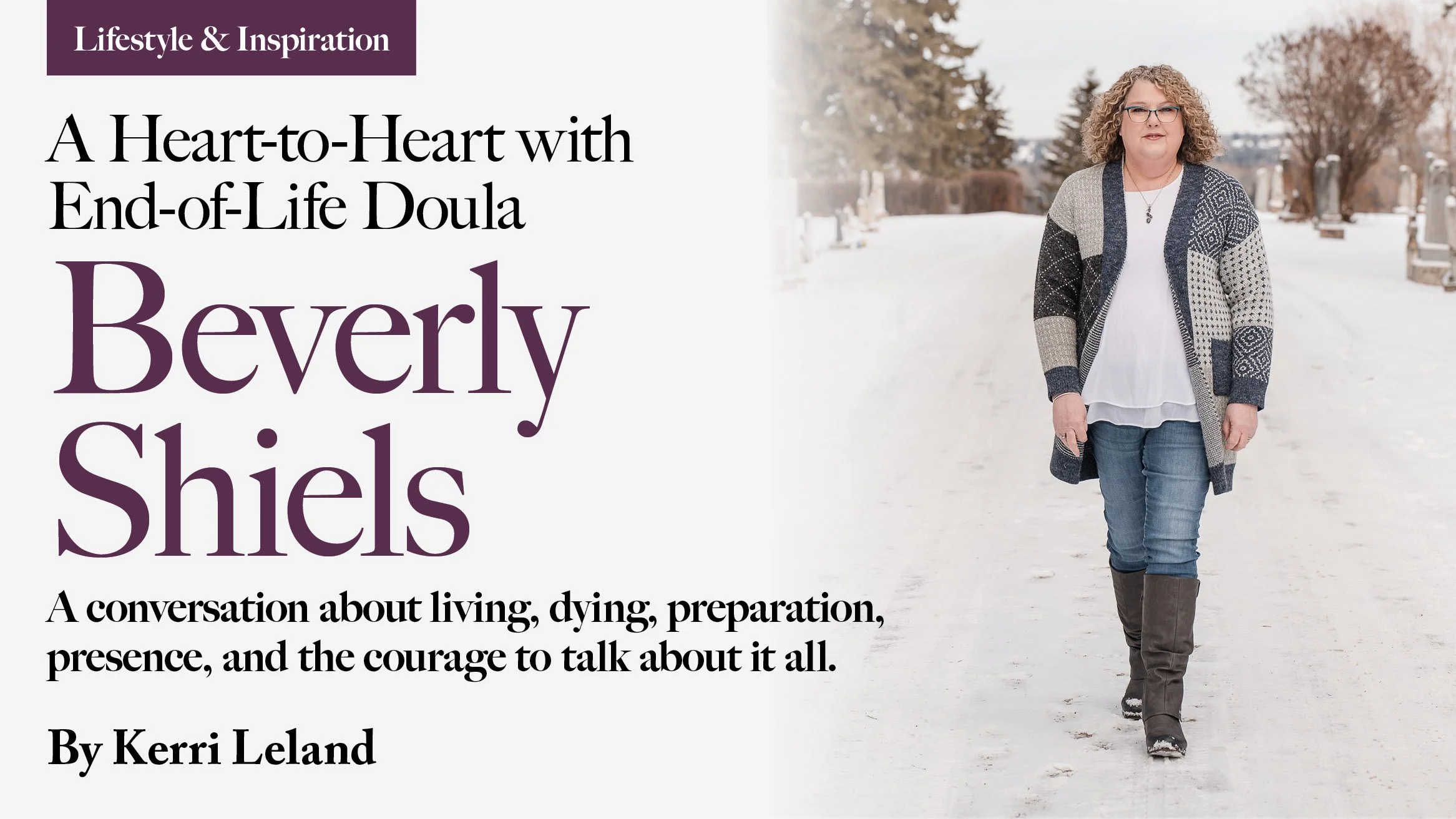
Beverley Shiels is a Registered End-of-Life Doula (REOLD) with the End-of-Life Doula Association of Canada and the founder of Courageous Goodbyes® End-of-Life Doula Services in St. Albert, Alberta. Through education, planning, and compassionate support, she helps individuals and families navigate one of life’s most significant transitions — grounded in the belief that dying is a natural part of living and that no one should feel they have to walk that journey alone. You can reach her at 780-910-3496 or courageous.goodbyes@gmail.com, and you can learn more at courageousgoodbyes.com.