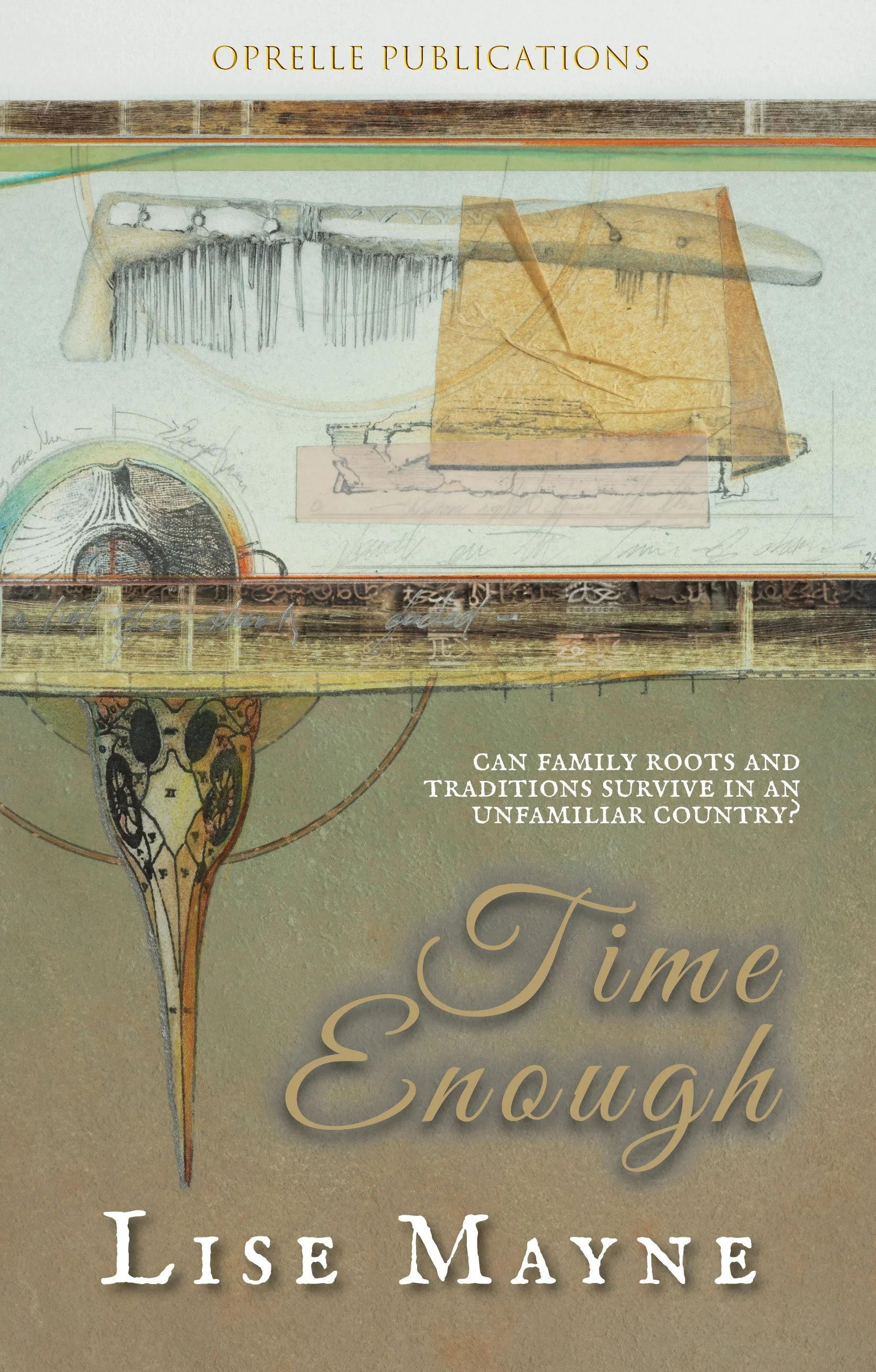

An Interview with Author Lise Mayne
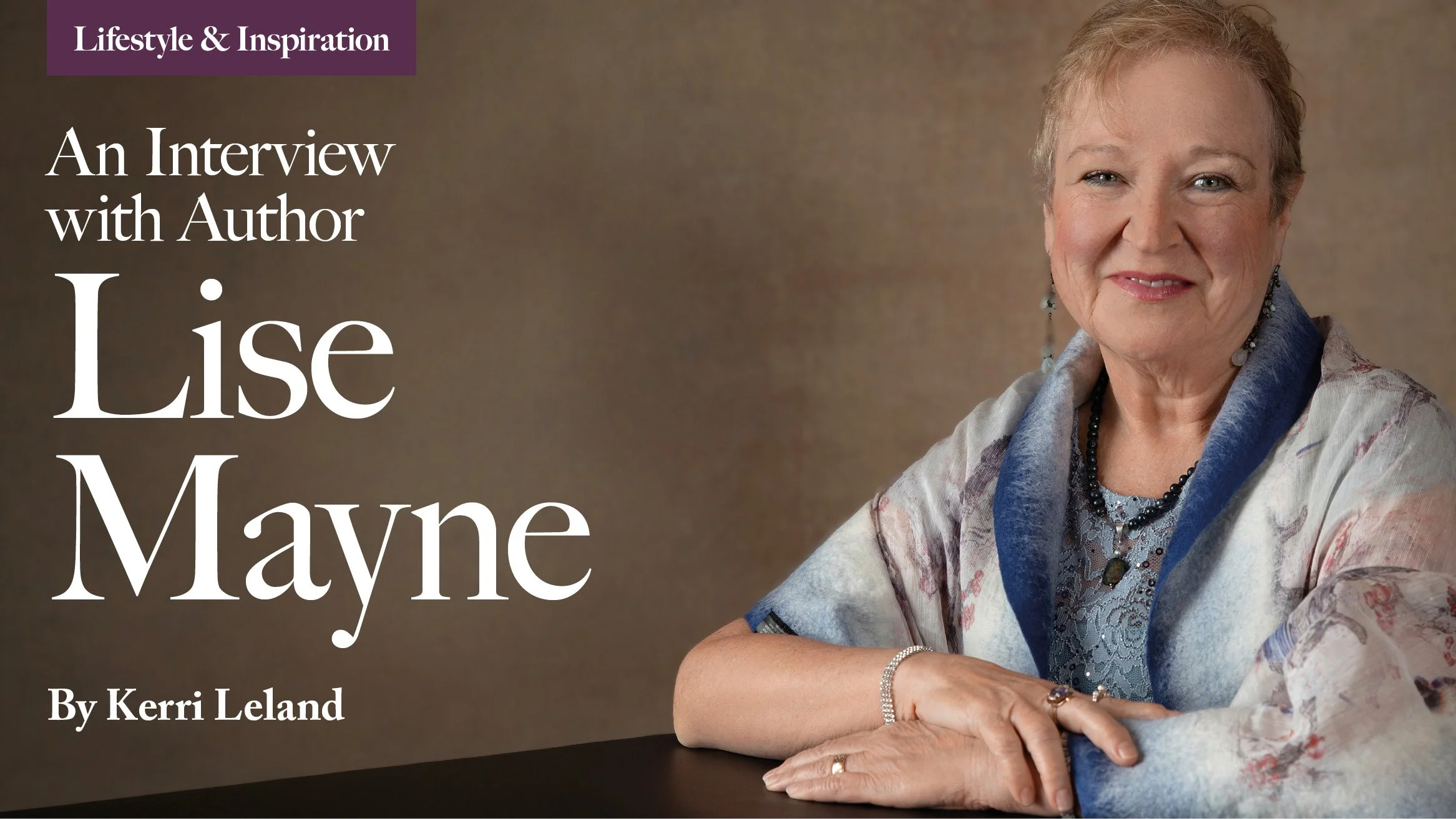
By Kerri Leland
Photo above by Lorraine Hjalte, Willow Creek Studio
Alberta author Lise Mayne has a beautiful way of bringing history to life, and her latest novel, Time Enough, is no exception. Set in the early 1900s, it follows a young family’s journey from the Isle of Man to North America as they search for a place to truly call home. It’s a story filled with heart, resilience, and the kind of quiet strength that carries people through life’s biggest transitions.
I had the pleasure of connecting with Lise to talk about the inspiration behind the book, her writing process, and the themes that matter most to her: family, courage, and finding your place in the world.
KL: You published Time Enough at age 67. What gave you the courage to pursue traditional publication after retirement, and what would you say to others who feel it might be “too late” to start something new?
LM: You’ll never be as young as you are right now. Goethe said, “Whatever you can do, or dream you can do, begin it. Boldness has genius, power, and magic in it. Begin it now.”
When people asked my retirement goal, I answered, “I want to go back to five.” By that I mean returning to five years of age, when everything was fresh and new, without the stress of working. Excited to pursue activities I’d longed for — watercolour painting, calligraphy, volunteering on public boards — I kept busy. Too busy. Then I realized I missed challenging my brain and pushing myself creatively. I had to give my lifelong dream a shot!
KL: Retirement is often seen as a time to slow down, but your journey sounds anything but quiet. How did writing and publishing Time Enough reshape your vision of what life after 55 can look like?
LM: I self-published my first novel, Becoming Sand, at age 57, while still working as a principal. I wrote the book during my 32-year teaching career. Upon retirement in 2013, I marketed and sold it out in 18 months. I spent the next eight years researching and writing Time Enough, while continuing my other interests, welcoming grandchildren and becoming a bluebird nest box monitor. Then began the querying process, a pursuit that took two years.
I never felt retirement meant slowing down. It takes a while to shift gears, but if you’ve been busy your whole life, I think it’s important to stay engaged and keep challenging yourself, while enjoying freedom from the alarm clock. Now, with a published book and audiobook to market, I work hard every day, but I make time for family, friends and fun!
KL: You toured more than twenty Chapters stores and several independent bookstores across Alberta last spring and summer. What was that experience like, and how did it feel to take your work on the road?
LM: The experience of travelling to bookstores across our beautiful province was marvellous and eye-opening. I visited towns new to me, such as the cute town of Bellevue. I met family and friends in places we’d lived and studied decades ago, including my hometown of Red Deer.
At my first book signing last May in Lethbridge, I was shaking; I hadn’t interacted with that many people since before the COVID-19 lockdown! But the staff and customers were so friendly and engaged that soon I became comfortable, and books started to fly off the table. My dream had come true. At every signing, I’ve been uplifted, made new friends and become even more proud to be Canadian.
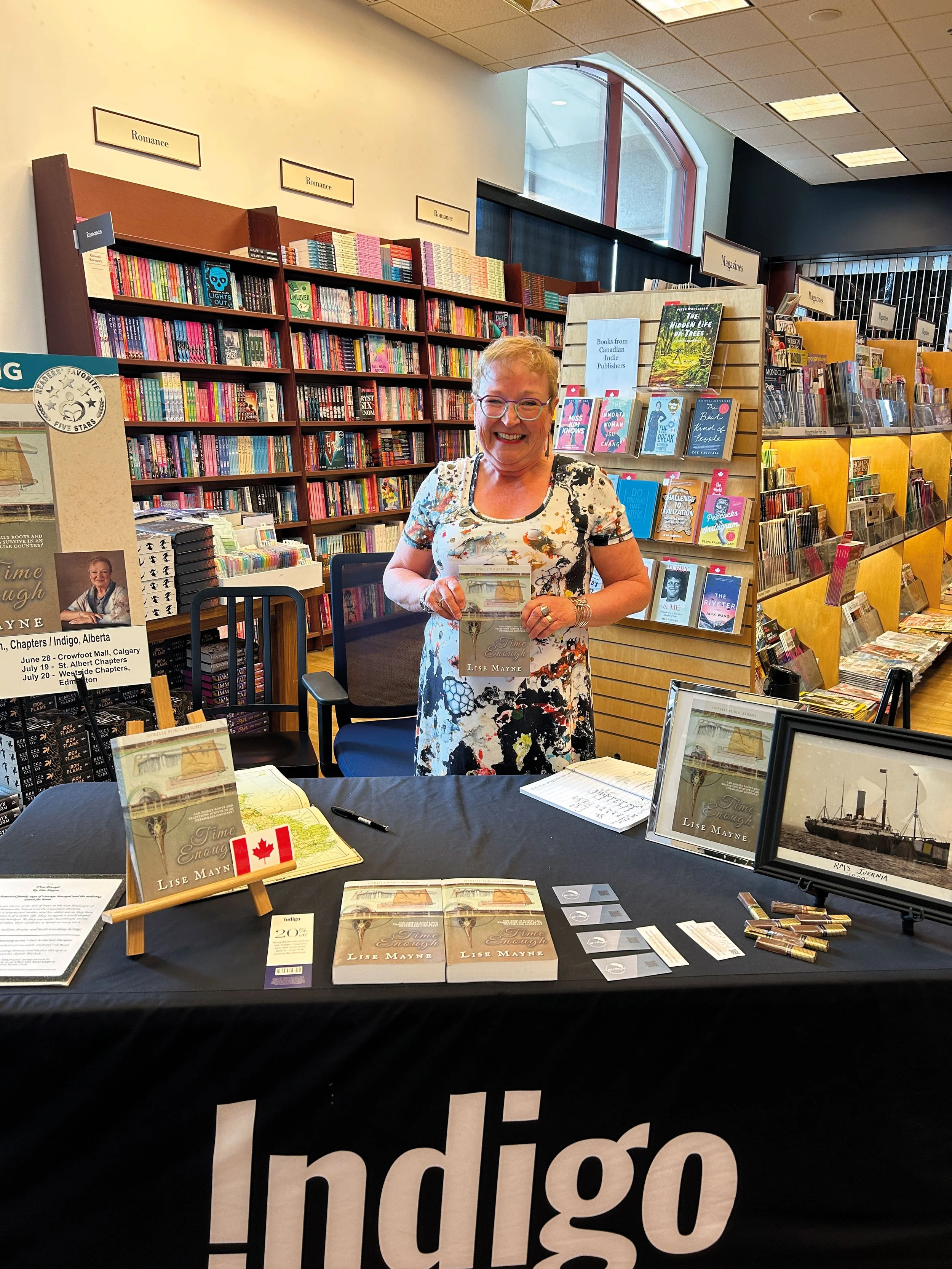
Lise’s first signing at Lethbridge Chapters, May 31, 2025. Photo by Holly Harper.
KL: Your novel explores immigration, settlement, and the search for home. Why do you think these themes resonate so deeply with older readers in particular?
LM: Unless descended from First Nations’ people, you are an immigrant to Canada, with an emigration story, whether you’re aware of it or not. I believe our Canadian immigration stories should be more broadly shared. The past is in danger of being lost in this fast-paced world, and along with it, our culture and heritage. History informs the present.
With tears in their eyes, older readers tell me about their family’s difficult journey, with little preparation and few resources. The promise of “free land” left many broken dreams and hearts in its wake. Remember that when you see abandoned houses and granaries on the prairies. With no social safety net, survival was at stake. Many people died, especially women in childbirth and children in the age before vaccines. As we age, we become cognizant of the sacrifices which made our lives possible. New immigrants to Canada relate to these circumstances and are curious about the history of early settlement. This was my goal in writing Time Enough.
KL: You shared a powerful moment reading about the Dirty Thirties to a group of seniors, including a Métis woman who was deeply moved. How do experiences like that affirm the importance of storytelling at this stage of life?
LM: As a child, I sat at my grandmother’s knee while we shucked peas or cleaned berries for canning every summer. I was enthralled by stories of the family’s homesteading in Saskatchewan, which I never forgot. Neither grandparent ever talked about where they’d come from in the first place. Through research, I learned that Grandma’s family originated on the Isle of Colonsay, then Manitoulin Island and Grandpa’s came from the Isle of Man, then Michigan. I discovered that poverty, disease and hopes for a better life motivated their emigration to unfamiliar lands.
The epilogue of Time Enough recounts the moment they abandoned the farm in the Great Depression. It’s the section of the book based on a real story, including honouring the first inhabitants of the land. The Métis woman at my reading was impressed by the honest dilemma between settlement and colonization: We never should have torn up the buffalo grass. We ought to have left this land to them as they knew how to live here. We can’t survive as they did for time out of mind. Sometimes I wish we’d never left Man. But then I’d never have met Mary… (Time Enough, p. 491).
KL: A younger reader told you your novel inspired them to ask more questions about their family’s migration story. Why do you believe it’s especially important for seniors to share their family histories with younger generations?
LM: My grandparents’ storytelling inspired me to pass on their legacy, as a teacher, a parent and now a grandparent. But I think it’s harder nowadays. When do we just sit and talk? Everyone is so busy. Are the young ones even interested in Nanny’s tales? How can I capture the depth of the knowledge passed down to me? I wish I’d asked my grandparents more questions and recorded their answers. Now, we have the technology to easily record stories, songs, recipes, etc. from our ancestors. Pioneer anthologies, family photographs, and museums like Heritage Park or Fort Edmonton can all bring the past to life, so our children will understand their roots. Write your stories, make a video, sing your old songs…heck, even the Beatles are ancient history now! Take the time. Make the time.
KL: Writing historical fiction requires research, discipline, and persistence. What does your creative routine look like today? How do you stay mentally and creatively active?
LM: I am constantly reading historical fiction, poetry and non-fiction, and I belong to several groups online, like the Historical Fiction Society and the Grandmother’s Collective. It’s been a steep learning curve for me to understand marketing and engage with social media, which I never did before. Producing an audiobook is another new challenge. The more I do, the busier I get, it seems!
KL: You live in Nanton and volunteer as a Rocky Mountain bluebird nest box monitor. How does staying engaged in your community and in nature support your creative life?
LM: I’ve always sought to help nature as much as possible: volunteering, writing letters to government officials, picking up litter, etc. My husband and I enjoy monitoring the bluebirds and tree swallows, from nestlings to fledglings, and I share our results with my group, the Calgary Area Nest Box Society mountainbluebird.org, for whom I am the secretary. I also give presentations to schools, libraries and church groups about this important conservation work. Our summer and fall are spent with family and birds, away from the computer. We love the Eastern Slopes of the Rocky Mountains, where the buffalo grass still grows, and the deer and the bluebirds play!
KL: For readers who dream of writing their own stories, whether memoir, fiction, or family history, what practical advice would you offer about getting started and navigating the Canadian publishing landscape?
LM: Put pen to paper. Years ago, I took a course from the wonderful writer Richard Wagamese (gone too soon), and he said to get up at the Blue Hour, just before sunrise and write. It’s the magic hour of quiet and peace, when the creative doors are open. I’ve followed his advice ever since. You get to sleep in a bit longer in winter! That’s natural. Writing is natural. Let it flow. There’s no right way to begin.
To pursue publishing opportunities, your first stop should be joining a writers’ organization like the Alexandra Writers’ Society, the Canadian Authors’ Association, or any number of such societies. You’ll find writing guides, advice and courses online and in person. Local libraries have writers-in-residence free of charge, and the library is your best bet for research. You can learn from and support local writers by taking out their books and attending free events. Check out universities and colleges and programs such as the Calgary Distinguished Writers’ Program.
You can find many opportunities to learn and grow as a writer, online and in person. Independent bookstores offer presentations by local authors, too. The world is your oyster. You have time, now go for it! No excuses! You’ll be amazed at the magic that will happen, as Goethe says. Who would have imagined that my book about my Manx ancestors would someday be in the Library and Archives of the Isle of Man? You just never know!
KL: Looking ahead to this summer, what adventures, literary or otherwise, are on your horizon?
LM: This year, we plan to go to Newfoundland and Labrador. We will also spend time camping with our family. These excursions always inspire poetry and stories. My Blue Hour runneth over. After twelve years of retirement, I’ve finally made it back…to five!
You can find Time Enough online at lisemayne.ca, Amazon, and Chapters, as well as at Owl’s Nest in Calgary, Tap Town Books in Nanton, and many Alberta libraries.