
An Interview with Artist and Gallery Owner, Grant Berg
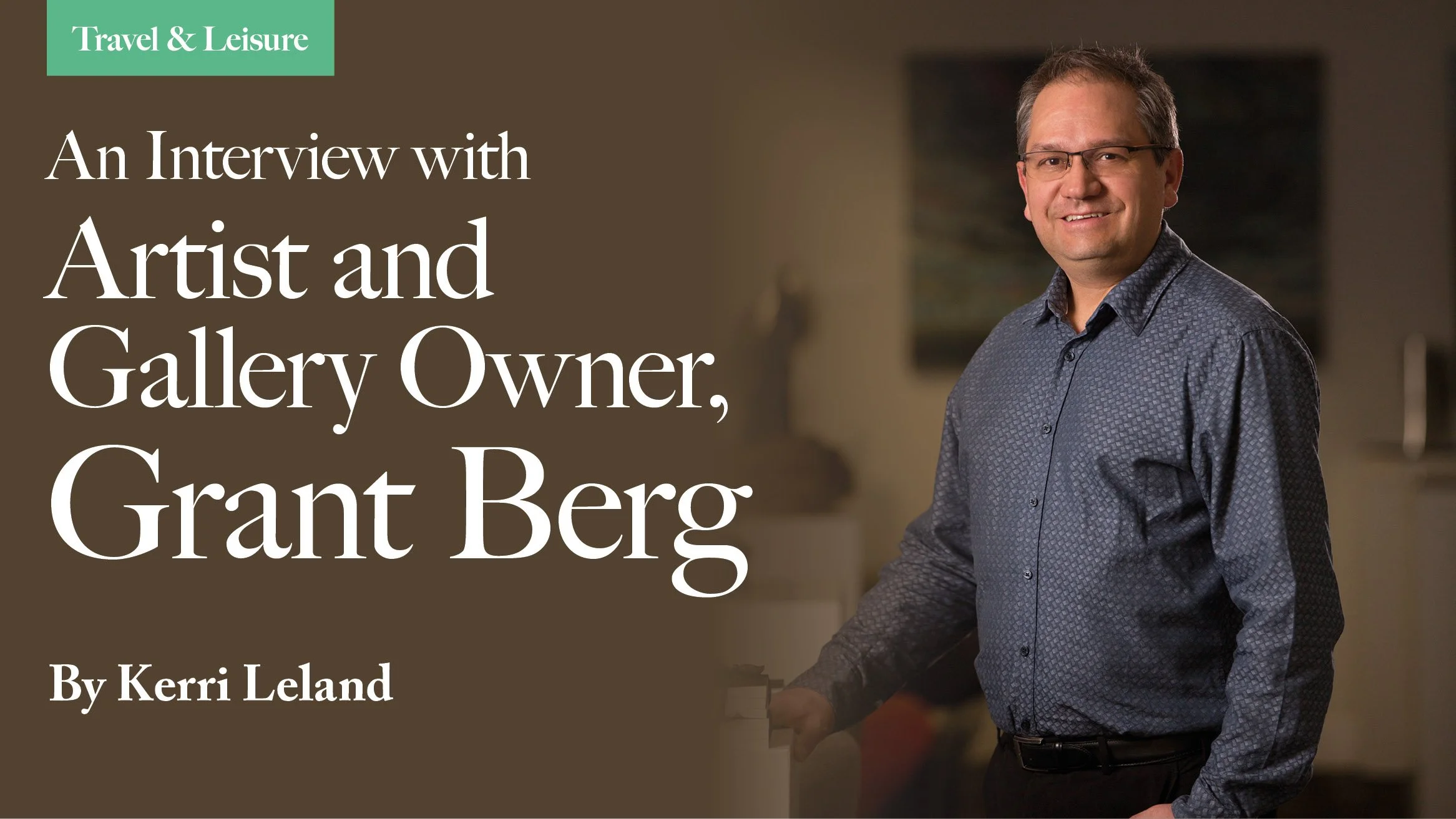
By Kerri Leland
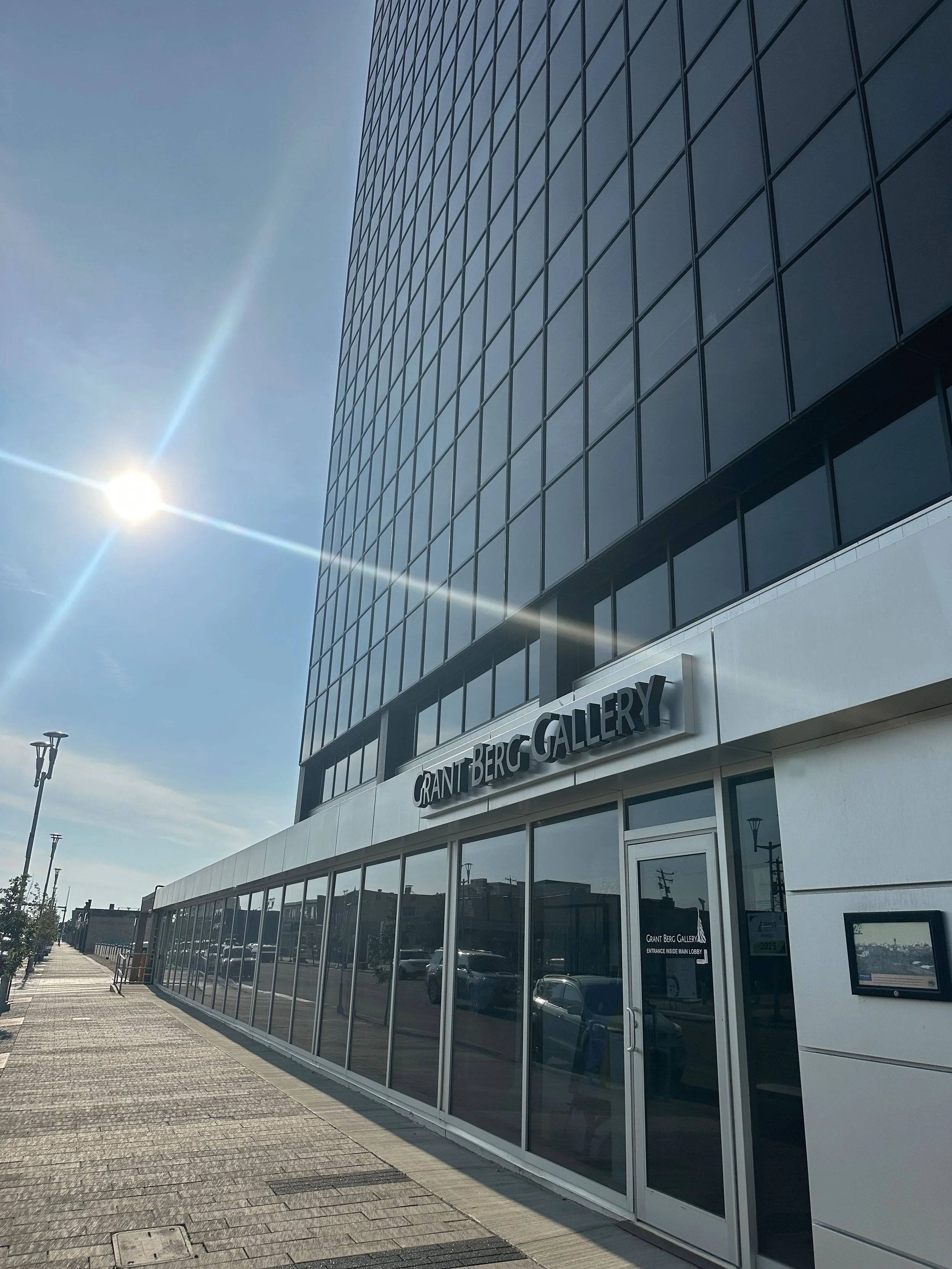
Tucked into the vibrant arts scene of Grande Prairie, Grant Berg Gallery offers more than just a place to view art; it’s a meaningful stop for travellers seeking connection, culture, and inspiration.
Owned by Indigenous artist Grant Berg, the gallery invites visitors to experience stories rooted in tradition, identity, and a deep sense of place. As summer unfolds and Canadians hit the road in search of memorable adventures, especially those embracing travel and discovery after 55, this Northern Alberta gem provides a rich and reflective pause along the journey.
I had the honour of talking to Grant about art, culture, and why exploring Indigenous perspectives can transform the way we travel.
KL: Can you tell us a bit about your journey as an Indigenous artist, and what inspires your work today?
GB: My journey has been a long one and has been featured in a book called Be Badass: Recipe for Success, by Jaquie Fenske. The short version is that when I was 13 years old, I had a serious medical issue where I had six major surgeries over one year, which I almost didn’t survive. While in the hospital, I listened to music and got lost in the artwork on every floor of the University of Alberta Hospital. Through that experience at a developmental age, I discovered the power of music and art to heal and to embrace life every single day.
I spent 29 years in broadcasting, bringing people music. I’ve been involved in the arts for over 20 years, the last 10 owning my own gallery.
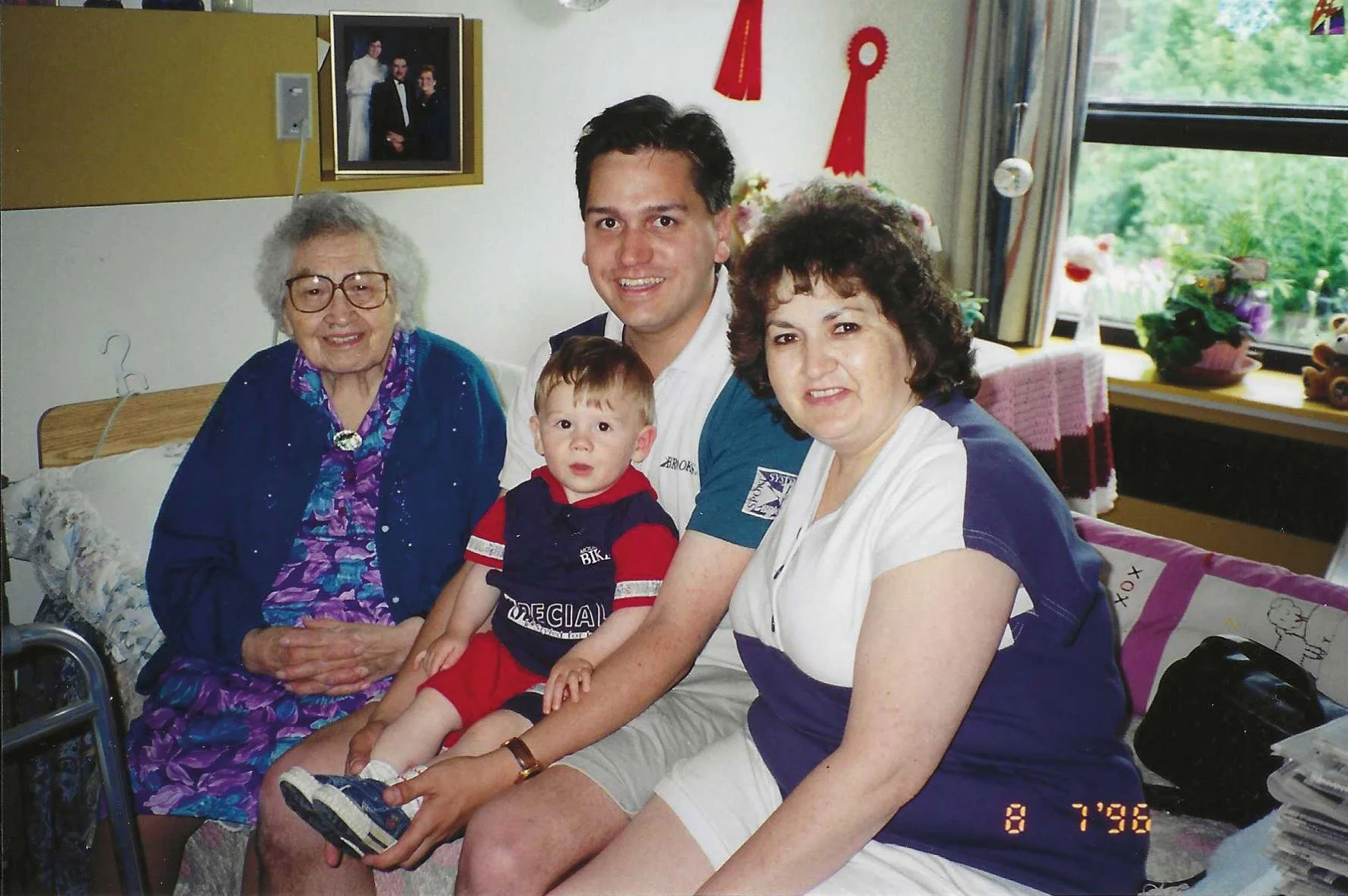
I grew up very close to my grandma, who was born in 1910. The world changed in her lifetime, and she adapted with strength, resiliency and love. She believed in me, and she believed that I could do great things. She taught me to be brave and accept challenges, and with that, I honour her and our ancestors in my sculpture and my writing.
KL: For readers who may be discovering Indigenous art for the first time, what would you want them to understand or feel when they experience your work?
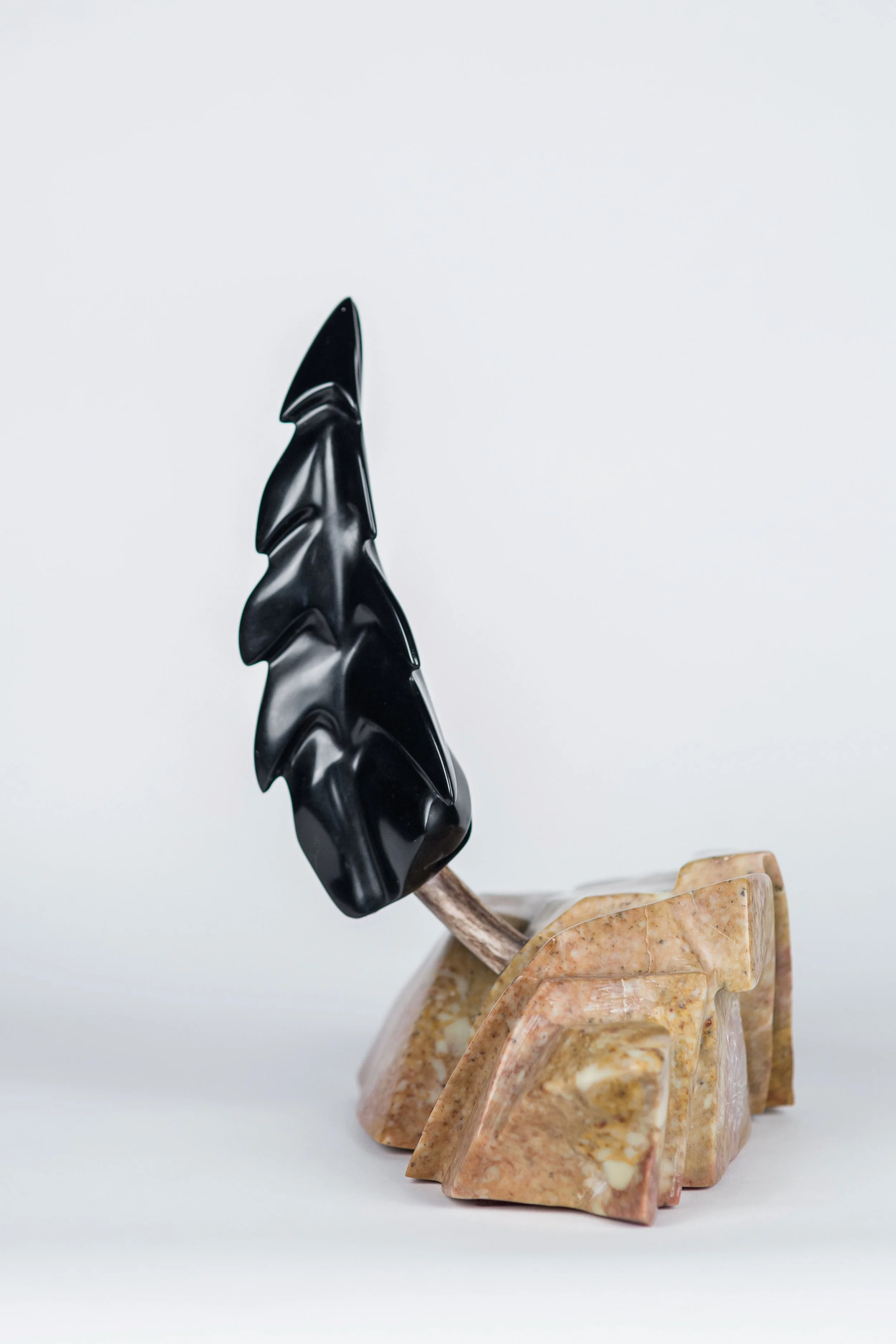
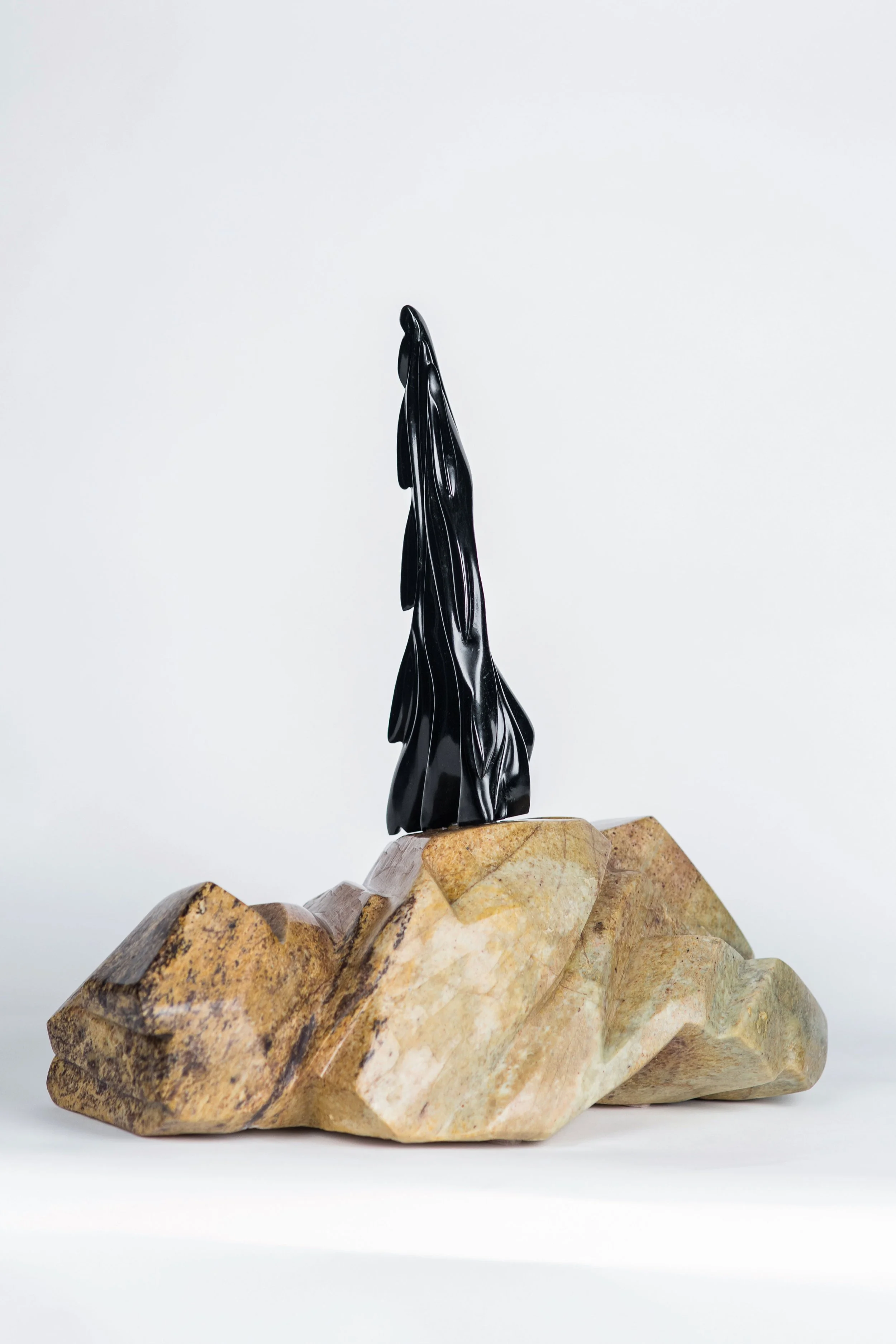
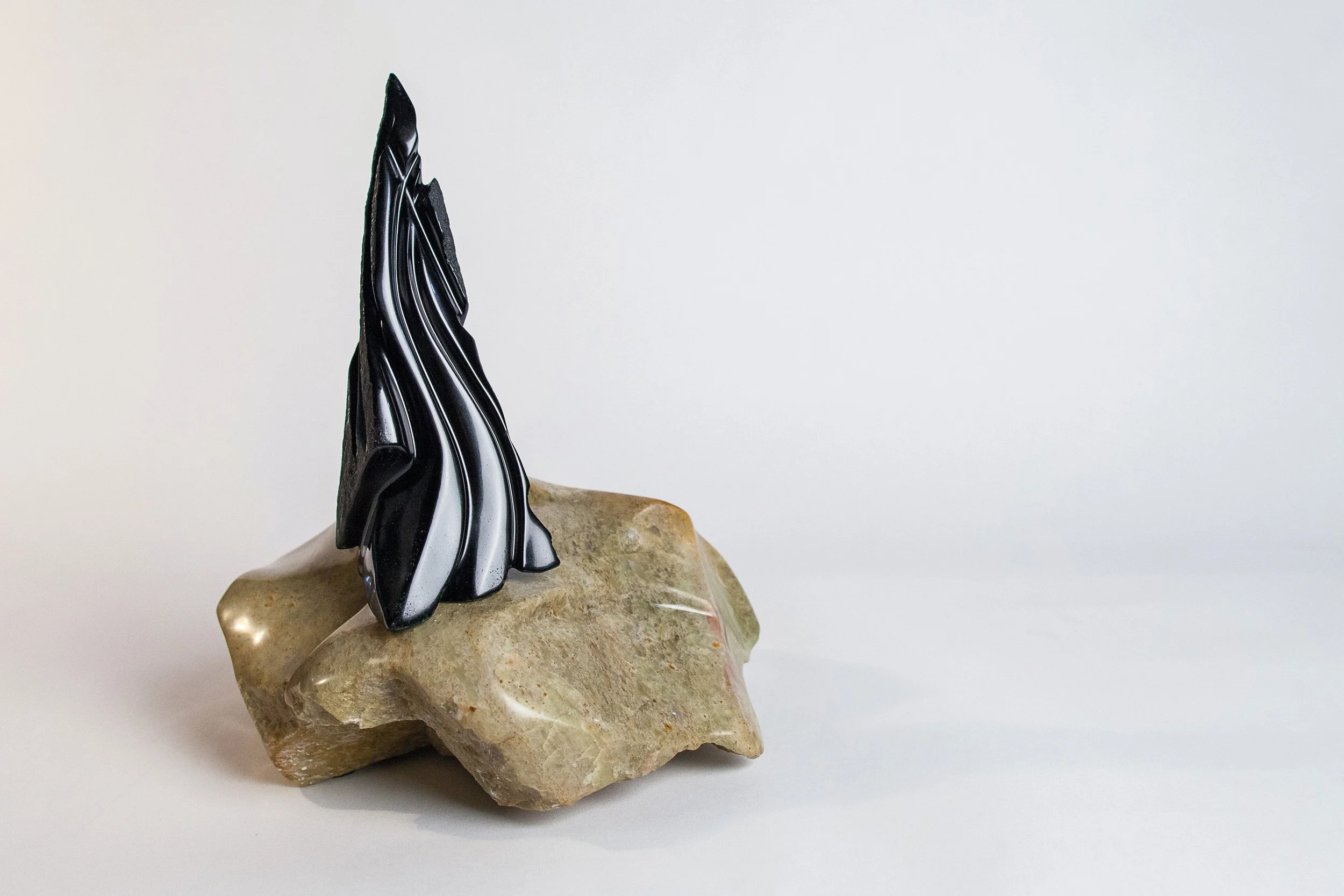
GB: In my sculpture, I represent the resilience of my ancestors. I sculpt trees from stone, and each tree flows and shows movement through the lines cut into the stone; no tree is perfect. Many leaning, twisted, and bent but standing proud and beautiful, shaped by the weather and elements as years pass, no different than my ancestors. Some fell and were lost to history, but those, like my grandma, became more beautiful as they adapted to the hardships of life.
KL: Why do you think exploring Indigenous art and culture is such a meaningful part of travel in Canada, especially for those rediscovering travel after 55?
GB: I believe we are at a point in our lives where we have a greater understanding of humanity, the permanence of what we can create, and the fragility of our own bodies. In Canada, we are only starting to recognize the peoples who have lived here before us. When we travel to Italy, Spain, England, Greece or Egypt, we instantly know where we are and recognize the cultures that came before us; these are embraced, celebrated and woven into everyday life.
For Indigenous Peoples, that blanket had its strings pulled out; it was illegal for Indigenous Peoples to speak their language and practice their traditions. Those are coming back now and are so beautiful. The West Coast Peoples lived artfully; even their homes were art. The music of drums and flutes is so beautiful. Exploring Indigenous arts and sites is acknowledgment, an acknowledgment that accepts the past but surrenders nothing, that by extension makes you better than you were before the experience. I will add that the food is also amazing, seek out traditional foods like bison, elk, fish, and so much more!
KL: Your gallery in Grande Prairie has become a destination in its own right. What can visitors expect when they walk through your doors?
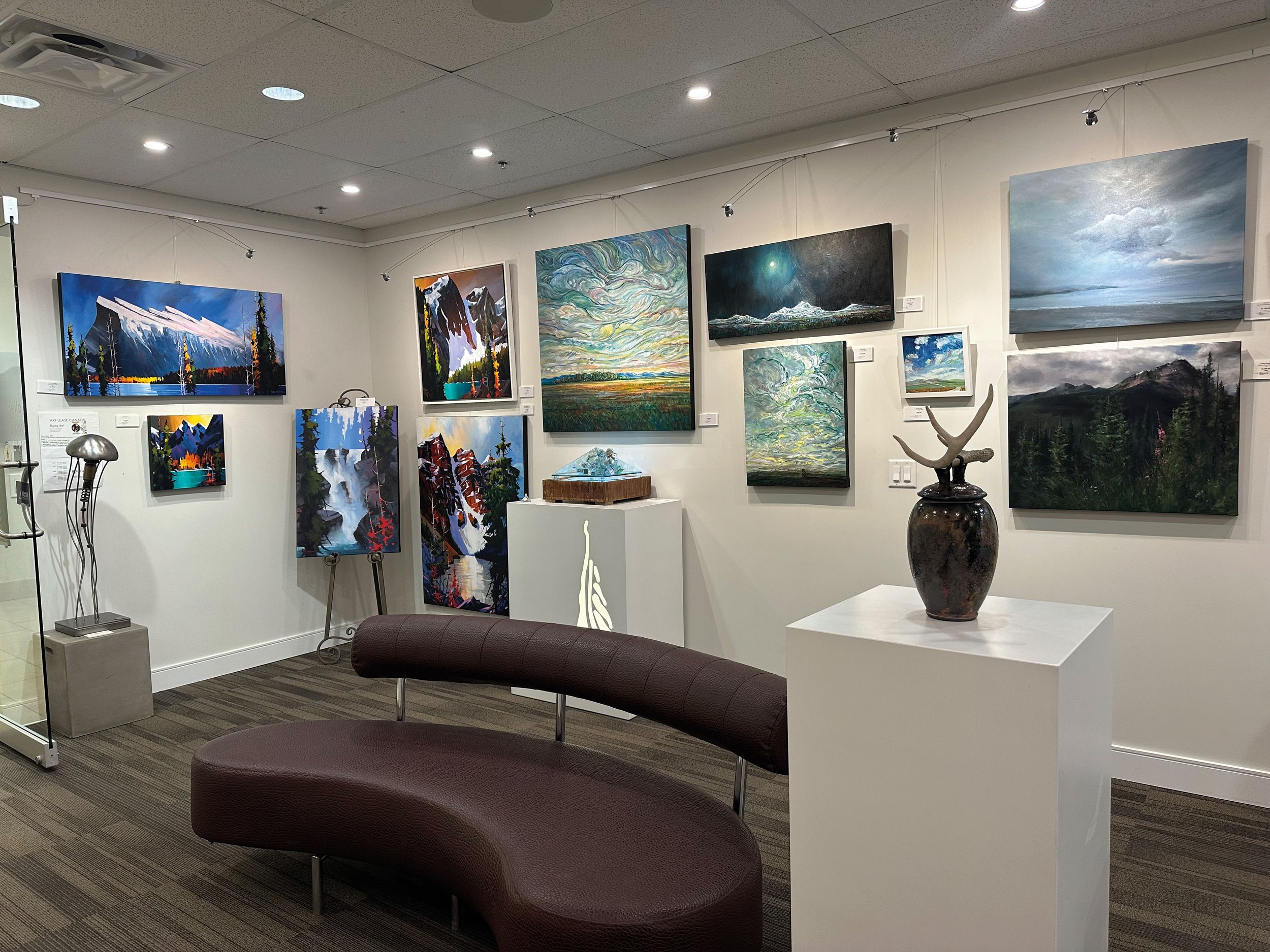
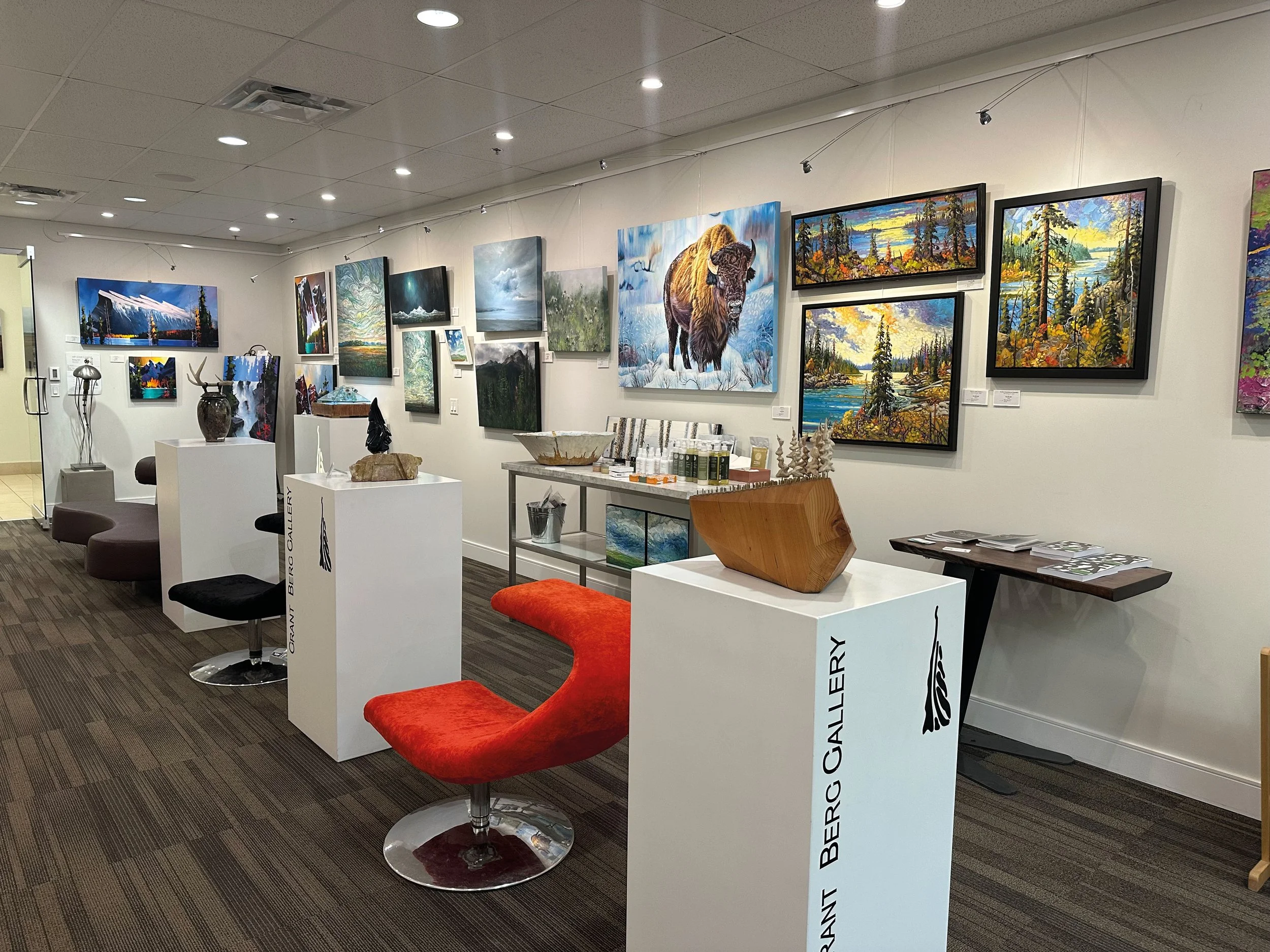
GB: I want every single visitor to leave calmer and more relaxed than when they arrived, with a greater understanding of the power of original art. I have a wide variety of art, hoping that every person who visits connects with something in the work and its artist. I hope that each visitor leaves with an image in their mind and a great memory, and in a perfect world, takes that artwork home so those memories are easily recalled at a glance.
KL: Have you seen more interest from mature travellers or collectors in recent years? What do you think is drawing people to Indigenous art at this stage of life?
GB: Absolutely, a quote attributed to Métis leader Louis Riel. “My people will sleep for 100 years, but when they awake, it will be the artists who give them their spirit back.” As a Métis artist, I feel it is my obligation to fulfill that; to restore pride in who they are and to share stories with the world. This allows the general public to engage with it as it has been largely suppressed or absent for a couple of generations. There was a cultural void in which we were denied so much history and beauty. As that void is filled, we as Canadians become more culturally fulfilled.
KL: What role has creativity played in your own life as you’ve gotten older? Has your perspective or artistic voice evolved over time?
GB: I was born an artist, as every kid really is. Criticism has destroyed many brilliant artists. In my early 20s, I had a boss who literally laughed at my work, and it shut me down for years. I restored my belief in myself only after I matured and realized he had no idea what I was trying to achieve.
With each level of success I achieved, I had fewer and fewer detractors. There is still one online, but his criticism is more a reflection of his failure as an artist. So, as I get older, I become more true to myself and less affected by criticism, as the criticism reflects who they are, not me or my work. Another quote whose source I cannot find: “The moon does not concern itself with the howling of the coyotes.” Has my voice evolved? It has. When COVID hit, in many ways, I retreated into my own mind to process what was happening. I found myself less drawn to the dusty physical process of sculpting stone and shifted to writing. Now I do both; I probably complete less than half the sculptures I used to, and I enjoy the writing process.
KL: For readers planning summer adventures in Alberta, are there any cultural experiences, events, or hidden gems you’d recommend they explore?
GB: I wrote two children’s books and have another in the pipeline; they are set pre-contact in Alberta. By putting myself in these places, stories come to me inspired by their location. They are the Clearwater River near Rocky Mountain House, which extends into the mountains. The second story covers the prairies between Red Deer and Rocky Mountain House, extending over to the Hoodoos of Drumheller and down to Head-Smashed-In Buffalo Jump. The third book includes the Milk River and Writing on Stone Provincial Park. I have signed a publishing deal for the first two: Astina and the Quest for Medicine will be released this September, and Astina and the White Bison in May 2027.
KL: What advice would you give to someone over 55 who is looking to reconnect with creativity, culture, or even start something new?
GB: Throw away the fear and doubt and embrace your creative side; it is there. Everyone is an artist, EVERYONE. It is part of being human. It is genetically ingrained in us, as our ancestors had to create almost everything to survive.
I sculpt and write; some paint, some make music or woodwork, and beading and sewing are all art forms that our ancestors did. Food! My mom and wife are culinary artists, which makes me brilliantly fortunate. You just have to experiment and find it. The moment I did my first stone sculpture, I knew I had found mine.
KL: What does National Indigenous Peoples Day mean to you personally, and how do you like to celebrate or reflect on it?
GB: Each year is different, in 2025 I did something special for myself. I started the day by visiting my mom. She is in a seniors complex in Camrose and turns 80 in July.
From there, I drove near Ohaton, where my Great Grandfather was given land scrip as a Métis. Unfortunately, the land was nowhere near where they had been living in the Lac La Biche area, so he contacted a lawyer in Edmonton to sell the land on his behalf. My great-grandfather never saw a penny. I went to that flat piece of land, which had few trees and no water, and tried to imagine myself in my great-grandfather’s heartbreaking situation.
Then I looped around to Tofield, where I grew up and where Grandma eventually moved from Plamondon. I drove by her house and relived memories. In many ways, I spent the solstice visiting my three previous generations. Getting to Edmonton, I spent the rest of the day with my brother at a ballgame.
KL: Summer is a time when many people are getting out, exploring, and reconnecting. What does a perfect summer day look like for you in Grande Prairie or the surrounding region?
GB: Many days come to mind: a workday where I come home, walk around Crystal Lake, visit the dock on a 24-degree day to see the swans with their babies swimming, and then pick saskatoons on the trails back home. Once each summer weekend, I try to visit the Wapiti River just south of Grande Prairie or the Peace River at Dunvegan north of Grande Prairie to walk the shores, look at rocks and driftwood and slow life down. Note that each of these involves being close to water.
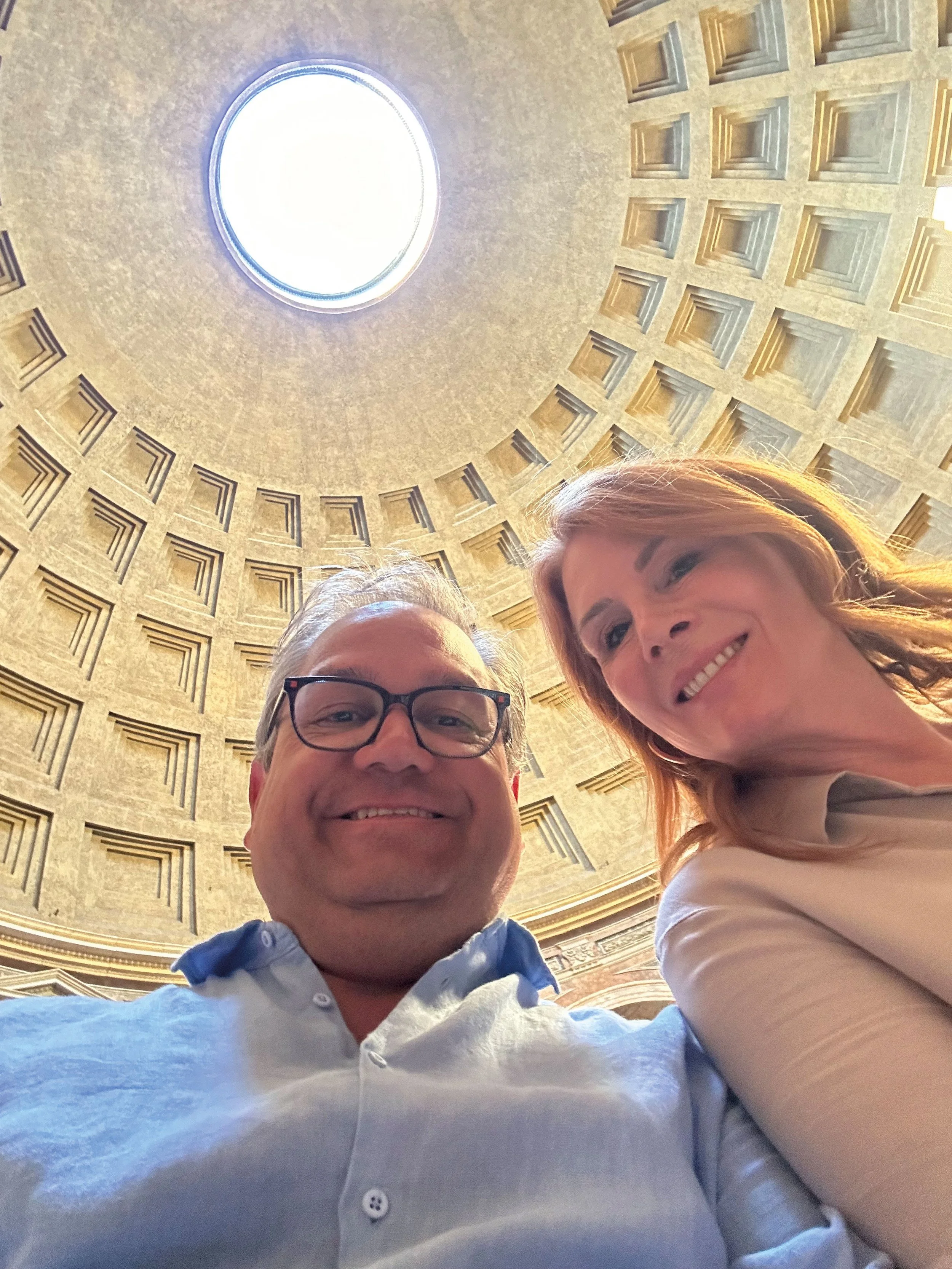
Grant Berg Gallery is located in Grande Prairie. To learn more, visit grantberggallery.com.