
By Maria Kupreeva, MSc RD
Fall in Alberta brings an abundance of apples, beets, carrots, parsnips and squash. Seasonal produce is often at its best for flavour and may also be easier on the grocery budget. It is a welcome invitation to warm the kitchen, cook a little extra and share a meal with family, friends or neighbours.
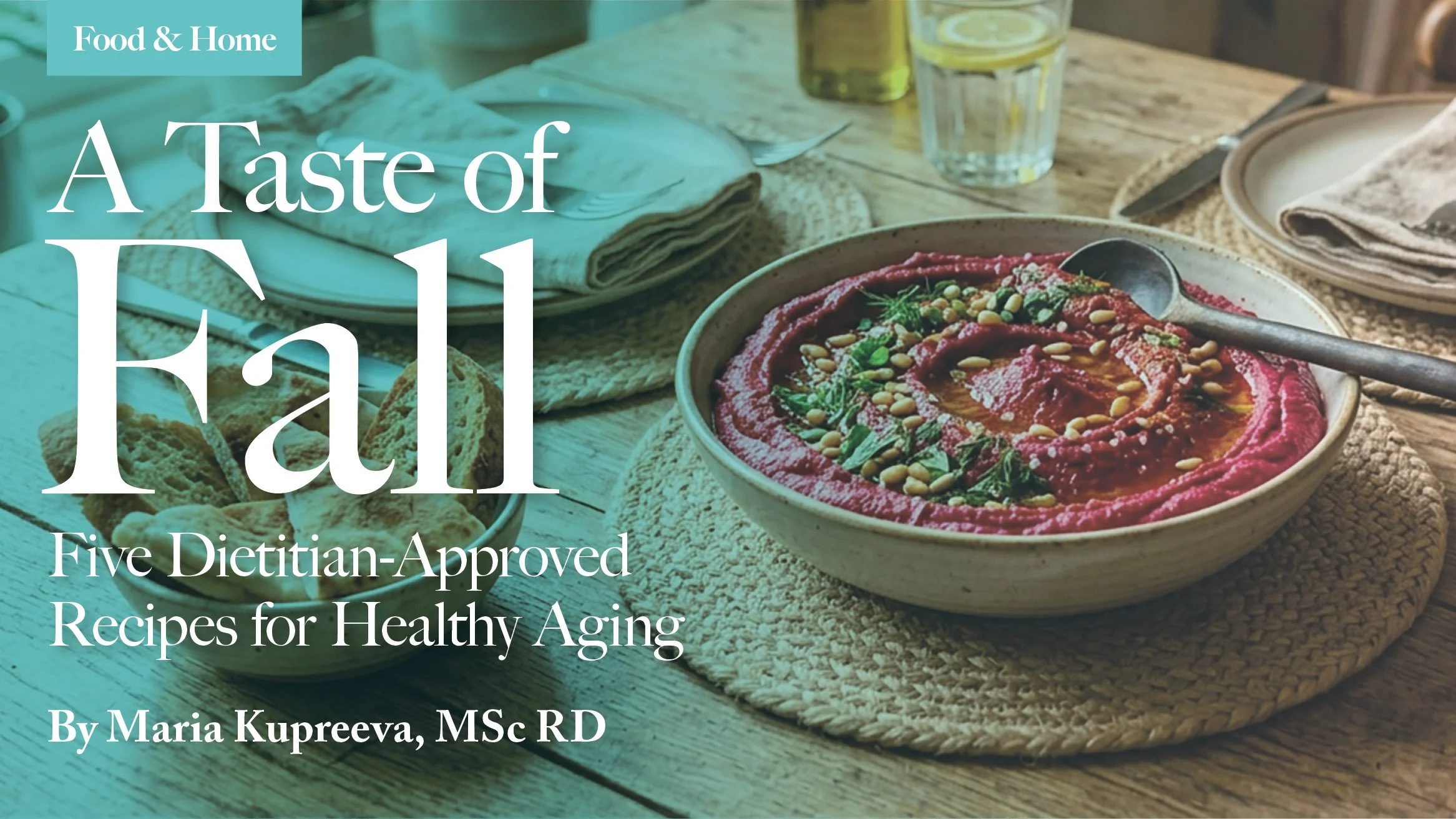
As we age, energy needs and appetite may decrease, yet the body still needs enough nourishment to maintain strength, recover from illness and support everyday activities. This makes protein especially valuable. Protein helps preserve muscle, supports immune function and contributes to wound healing. Including a protein food at each meal and snack is often easier than trying to catch up at the end of the day. In these recipes, Greek yogurt and milk are used to add protein; silken tofu enriches the carrot-parsnip soup; chickpeas and tahini added to the beet hummus; and salmon serves as a healthy protein choice at dinner.
Fluids and fibre deserve equal attention. The sensation of thirst may become less noticeable with age, and illness, medications or mobility challenges can make it harder to drink regularly. Water is an excellent first choice, but soup, milk, tea, and other beverages also contribute. The smooth root-vegetable soup and sparkling apple-pomegranate cider offer two seasonal ways to add fluid. Fibre supports regular bowel function and digestive health, but it works best when fluid intake is adequate. Oats and apple in the breakfast recipe, chickpeas in the hummus, and squash, carrots and mushrooms in the salmon bowl all add fibre throughout the day.
Although energy needs often decline with age, vitamin and mineral needs generally remain the same, and for some nutrients increase. However, smaller appetites and age-related changes in digestion and absorption can make these needs more difficult to meet. Vitamin A supports normal vision and immune function; carrots and spaghetti squash provide colourful carotenoids that the body can convert to vitamin A. Vitamin B12 contributes to healthy red blood cells and normal nerve function, with salmon, yogurt and milk providing food sources. Calcium and vitamin D work together to support bones, while calcium also helps muscles function. The oatmeal supplies calcium through yogurt and milk or fortified soy beverage, calcium-set tofu contributes calcium to the soup, and salmon is one of the few foods that naturally contains vitamin D. Iron helps carry oxygen through the body, while zinc supports immune function and tissue repair. These nutrients are found in both animal and plant foods. Pairing plant sources of iron with vegetables or fruit that provide vitamin C can help the body absorb more of that iron. A squeeze of lemon in the hummus is therefore useful for flavour as well as nutrition.
Rather than trying to track every nutrient separately, look for variety across meals and snacks: a protein food, colourful vegetables or fruit, a whole grain when it fits, and something to drink. The five recipes below put that approach into practice using familiar fall ingredients. Adjust portions, seasonings and textures to your appetite and abilities, and ask a registered dietitian for individualized guidance if a health condition, reduced appetite or swallowing difficulty affects what you can eat or drink.
A simple fall formula: pair colourful seasonal produce with a protein food, add a whole grain when it fits, and keep a drink within reach.
Small steps, shared meals
Healthy eating does not need to be complicated or perfect in any stage of life. A pot of soup, a make-ahead breakfast or a simple salmon dinner can make nourishing choices easier. Whenever possible, make food enjoyable: use favourite seasonings, adapt textures as needed and share meals with others. Food supports health, but it also brings comfort, connection and pleasure to the season.

Maria Kupreeva
Maria Kupreeva, MSc, RD, is a Calgary-based Registered Dietitian with experience in seniors’ health and long-term care. Her work focuses on practical, person-centred nutrition that supports strength, quality of life and enjoyment of food. She is a member of Dietitians of Canada and an active member of the Gerontology Network.