


By Tammy Lautner
Nobody tells you how lonely this is. Most days I am the only one standing between my parents’ needs and whatever is supposed to happen next. It is not just tiring. It is frightening in a way people do not talk about: the fear of getting something wrong for the people who trust you most.
It is frustrating too, carrying the quiet assumption that you have all the answers, that you are the one who solves the problem, and that your time somehow matters less than everyone else’s.
This loneliness is real, and it does not go away just because other people are technically involved. This is what people mean when they say “sandwich generation,” though the phrase has always felt too tidy for what it actually is. It usually describes people in their 50s and 60s caring for parents in their 80s and 90s, often while still working, sometimes still supporting their own adult children or grandchildren. The math is not complicated. People are living longer. Families are smaller. The generation in the middle is stretched further than the ones before it, with fewer siblings to share the load and less time carved out for any one relationship.
One misconception worth naming: this role doesn’t always land on the oldest child, or the one who lives closest, or the one with the least going on in their own life. I am the youngest of four, and in my experience, and in most families I work with, the person who ends up carrying this load is the one with the temperament for it, not the birth order or the geography. If that person is you, it likely has more to do with who you are than what number child you were.
The emotional strain is not what people expect
Most people brace for exhaustion; what catches families off guard is the rest of it. Resentment that flickers in when a plan gets cancelled for the third time that month, followed immediately by shame for feeling it at all. Grief for a relationship that is changing shape while the person is still very much alive. It is possible to love someone fully and still want your own life back for an afternoon. Both are true at once, and few people give themselves permission to admit it.
If you recognize this in yourself, know that it is a normal response to an abnormal amount of responsibility, not a character flaw. Naming it out loud, to a friend, a therapist, or a support group, tends to loosen its grip. Silence is what makes it feel shameful.
There is also a strain particular to the parent’s side of this that families often miss. A parent can choose to move into supportive living and still feel rushed by how quickly it happens. Letting go of decades of belongings in a matter of weeks rarely feels like a choice, even when the destination was theirs to pick. Giving a parent more time with the sorting process, where possible, and acknowledging the loss out loud rather than rushing past it, makes a measurable difference in how they land in a new home.
It is also worth saying plainly that not every caregiving relationship is rooted in warmth. Some adult children are managing this stage alongside old wounds, strained history, or a parent who was never easy to love. The obligation to help does not disappear because the relationship is complicated, but pretending the relationship is simpler than it is only adds weight to an already heavy load. Being honest about the complexity, even privately, tends to ease the guilt that comes with resentment.
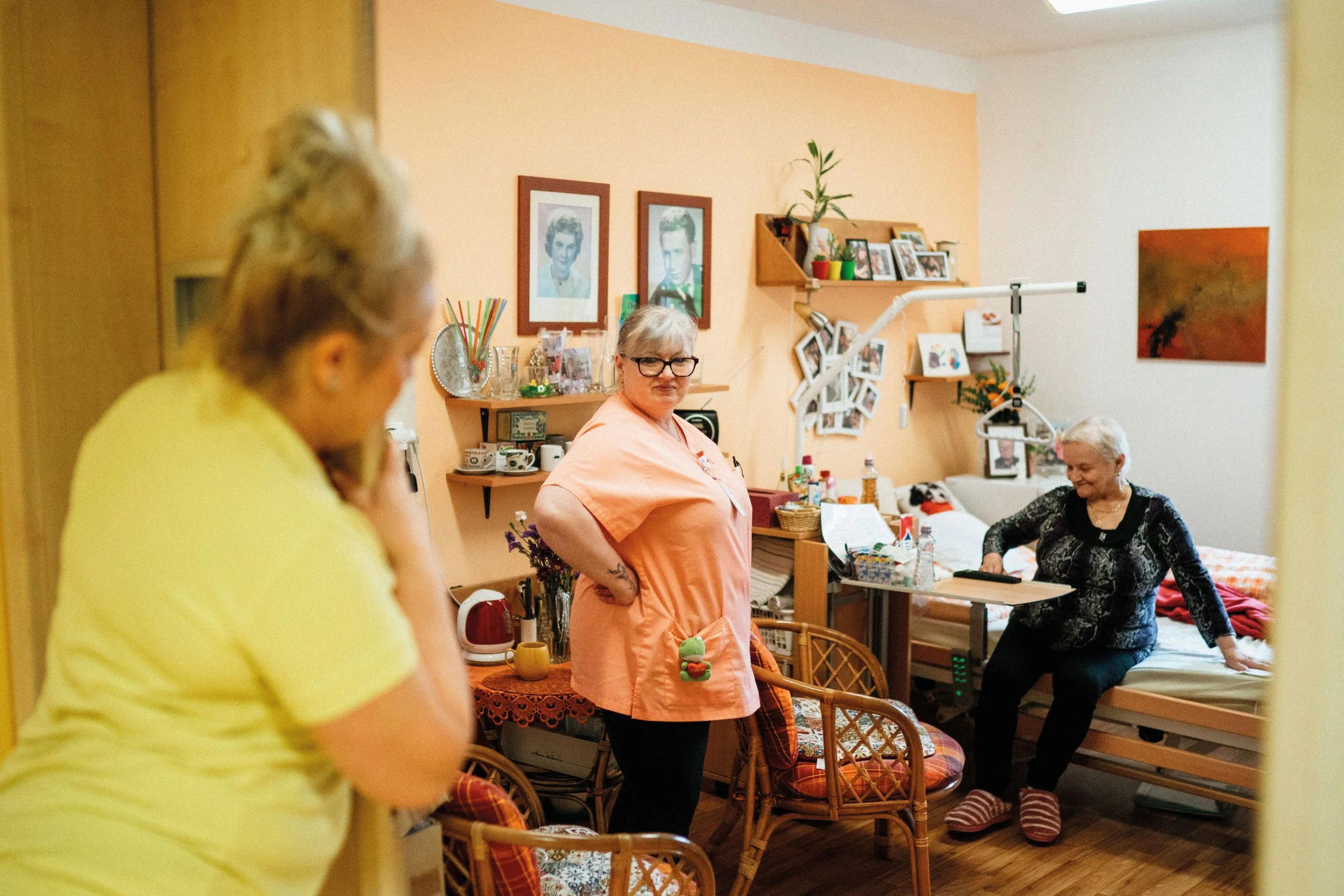
Role reversal changes who you are, not just what you do
At some point, adult children stop being only a son or daughter and become the person who reads medication labels, manages a home care schedule, and makes calls their parent used to make without a second thought. The tasks themselves are usually manageable. What is harder is the identity underneath them, holding both the child role and the manager role at once, without losing the first one entirely.
This shift is often hardest in the first months after a major transition, like a hospital discharge or a move into a care setting, when a parent is also learning to navigate new routines, staff, and rules. It helps to separate the two roles deliberately. Set aside time that is just visiting, not managing, even briefly. It preserves the relationship underneath the logistics.
Parents feel this shift too, even when they do not say so directly. Being managed by your own child, however necessary, can feel like a loss of independence layered on top of everything else already being lost. Involving a parent in decisions wherever possible, even small ones, helps soften that loss without slowing down the practical work that still needs to happen.
Decision fatigue is the part no one names
Few people in this stage face one enormous decision. Instead, they face hundreds of small ones, made alone, with no clear right answer and no one to hand them to. What to keep, sell, or give away before a move. Whether a few hours of home care a week is enough or a sign more is needed. Whether to raise the next level of care now, or wait.
The fatigue is real, and it compounds. A few things help. Build a short list of trusted people: a family doctor, a case manager, a care navigator- who you can bring decisions to rather than carrying them solo. Write decisions down as they are made, so you are not starting from scratch every time a new symptom or setback appears. And give yourself explicit permission to make a good enough decision rather than a perfect one. Waiting for certainty in this stage of life usually just means waiting longer to feel relief.
Timing adds another layer to the fatigue that is rarely discussed. Health systems move on their own schedule, not yours, and a decision that felt premature in January can suddenly feel overdue by March. Building in regular check-ins, even informal ones, with whoever is involved in a parent’s care helps catch that shift before it becomes a crisis, rather than after.
What I would tell someone starting this now
It does not get easier, exactly. It gets more familiar. You learn who to call, what questions to ask, and how to sit with resentment without letting it convince you that you are failing someone. You are not. This is genuinely difficult work, often without a map, and often without anyone else acknowledging that it is difficult at all.
If you are in it now, the most useful thing you can do is stop trying to carry it perfectly and start building support around yourself, whether that is other family members, a professional advocate, or simply people who understand what this stage actually costs. You do not have to hold all of it alone, even when it feels like you are expected to.
Two Conversations Nobody Wants to Start
Most families wait for a crisis to force these conversations. By then, everyone is exhausted and deciding under pressure instead of with any real clarity. Starting earlier changes what is possible.
The supported living conversation carries a different kind of weight, because it can feel like an ending rather than a beginning. What helps is naming the trade honestly instead of dancing around it: less isolation and less cooking, in exchange for a smaller space and a harder goodbye to the family home. Parents who help choose that trade, even in small ways like touring a place before it becomes urgent, tend to land better in it than the ones who feel it happen to them.
The end-of-life conversation does not need a script, but it does need three specific answers:
What matters more to your parent: comfort or more time?
Where they want to be if they are dying.
Who they trust to decide if they cannot speak for themselves. Write the answers down and put them somewhere your family can actually find them. A conversation without a record disappears the moment you need it most.
Neither conversation gets easier by waiting. It just gets later.
Tammy Lautner
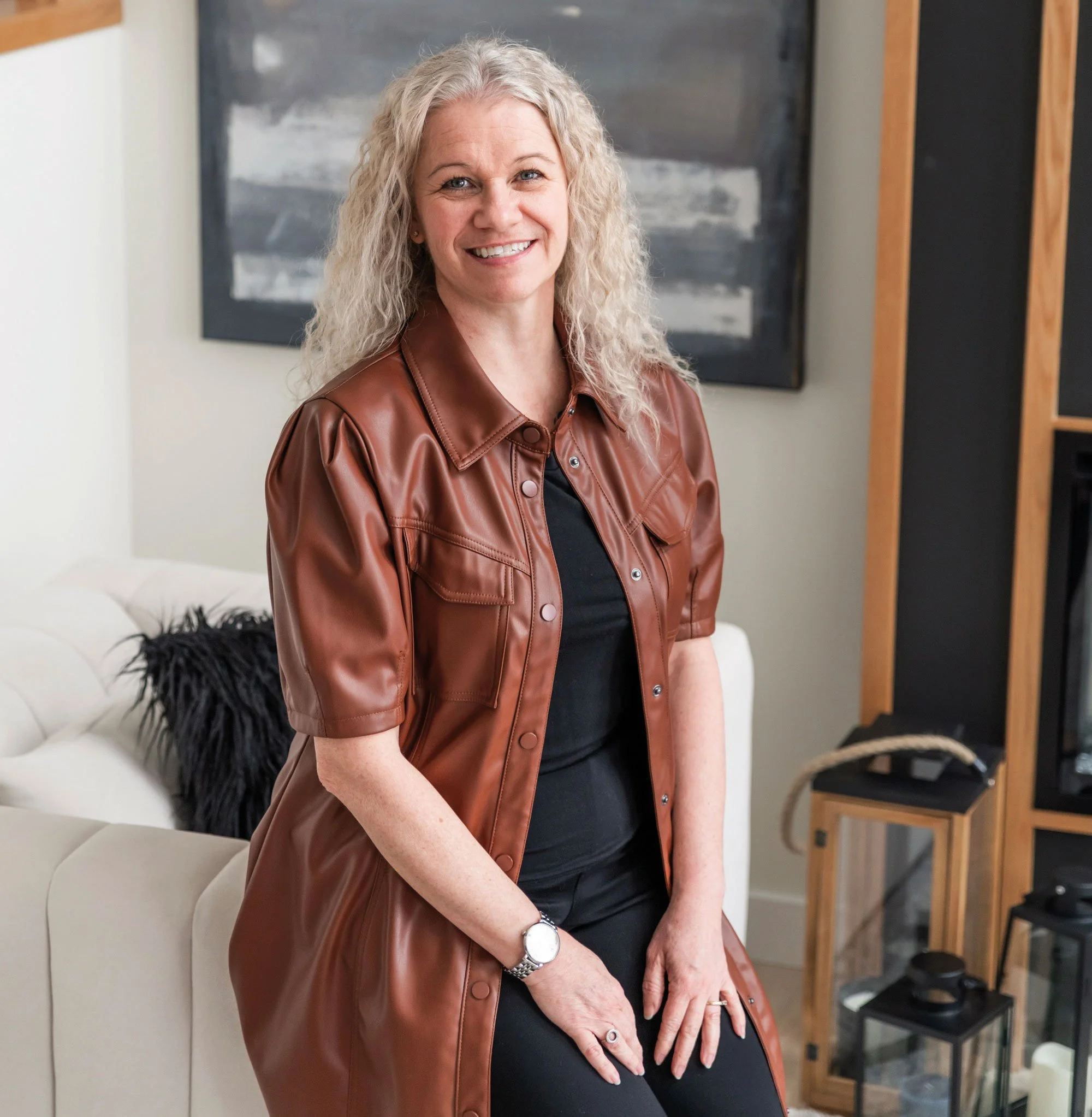
Tammy Lautner, RSW, is the Founder and CEO of Peace of Mind Consulting in Edmonton, Alberta, where she helps adult children navigate caring for an aging parent. With 25 years of social work experience, she provides advocacy and guidance to families facing the many decisions that come with supporting an older adult. Tammy is also currently living this stage of life, supporting her own parents through a significant transition. This experience shapes both her professional work and her personal understanding of what families go through. To learn more, visit www.peaceofmindalberta.com or email hello@peaceofmindalberta.com.