The Freedom Fund: Creating a ‘Fun Budget’ in Retirement
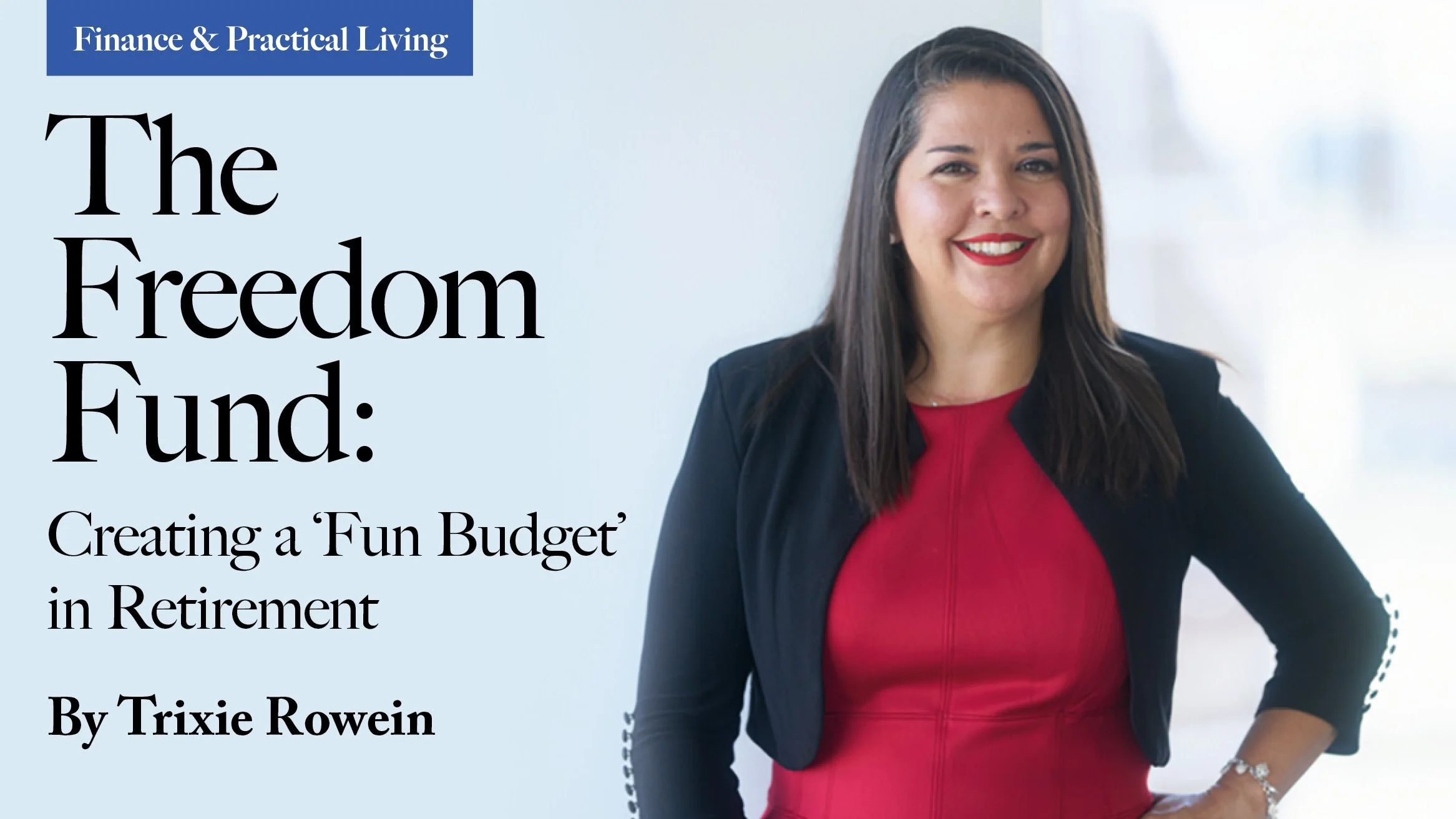
By Trixie Rowein
When you retire, your next job isn’t to reduce spending— it’s to prioritize it. Everybody dies, but not everybody lives, so it’s important to have a fun budget in retirement to do all the things you want to do but haven’t done, be it travel, restoring a classic car, woodworking and more.
If you plan to be adventurous during retirement but aren’t sure how to afford it, you’re not alone. The biggest mistake retirees can make is to start slashing expenses out of fear. Without understanding your true income, you may unnecessarily cut things that bring you joy.
Here’s a three-step retirement-friendly plan to help you thrive in your golden years.
Understand Your Income Sources
Unlike your working years when you knew exactly what was going into your bank account, retirement can involve multiple streams of income from a variety of sources that can change every month.
These could include your defined benefit pension from work, government benefits like Canada Pension Plan (CPP), and Old Age Security (OAS). There’s also income from personal savings from your RRIF (your converted Registered Retirement Savings Plan), LIF (your converted Locked-in Retirement Account) and Tax Free Savings Account (TFSA). There’s also investment income outside registered accounts to factor in, and sometimes part-time work.
When you add up your multiple sources of income, you can then craft a budget that works for you.
Identify Your Expenses and Spend on What You Love
Next, identify your expenses as needs and wants. Groceries, utilities, insurance premiums, condo fees, property taxes, debt payments, interest charges and out-of-pocket health-care costs all need to be covered before discretionary items like travel or hobbies.
Now estimate how much you’d like to spend on the fun discretionary stuff: dream trips, dream cars, hobbies. If total income minus total costs leaves you with a negative value, your spending is too high. See if you can cut spending in certain areas or take that dream trip every two years instead of annually.
Retirement is too precious to waste money on things that don’t matter. If you love gardening, invest in quality tools. If you haven’t gone to the gym in months despite paying for it then save the money and go walking. Cut out spending that brings little happiness. It’s simply not worth it.
Spending Isn’t Linear as Retirement Has Different Phases
To help you prepare for both wants and needs during retirement, break retirement into three phases: “go-go,” “slow-go,” and “no-go.”
The “go-go” phase is often the beginning of retirement, when many prioritize fun, like travelling more or trying new things. Plan for expenses to be higher in this phase to account for those fun plans.
Eventually, that list runs out, or you run out of steam. When that happens, you pivot into the “slow-go” phase. This is when people start to slow down more, and expenses slow down with them. If, and when, you hit the “no-go” phase in which your health precludes you from doing much, expenses may move higher because health care costs may be at their highest.
There is a transition from expenses for one thing to expenses for another thing, so prioritize your fun budget in the “go-go” phase.
Preparing for all three phases will ensure you have fun and are ready for whatever retirement entails when you get there. This is where planning makes a huge difference. Please contact our office at 780-414-2552 for a second opinion on your retirement-fun budgeting.
Information in this article is from sources believed to be reliable; however, we cannot represent that it is accurate or complete. It is provided as a general source of information and should not be considered personal investment advice or solicitation to buy or sell securities. Raymond James advisors are not tax advisors, and we recommend that clients seek independent advice from a professional advisor on tax-related matters. The views are those of the author, Trixie Rowein, and not necessarily those of Raymond James Ltd. Investors considering any investment should consult with their Investment Advisor to ensure that it is suitable for the investor’s circumstances and risk tolerance before making any investment decision. Raymond James Ltd. is a Member of the Canadian Investor Protection Fund. Raymond James Ltd. is a Member of the Canadian Investor Protection Fund.

Trixie Rowein
Trixie Rowein is known for her work ethic and commitment to the community and clients. She started her career at Raymond James in 2000 as a financial advisor and has been empowering and guiding clients to make smart decisions for 25 years. She and her team specialize in advising clients going through a transition, including retirement, loss of a spouse through death or divorce and transitioning wealth to the next generation. Growing up in Edmonton in an immigrant family, she saw firsthand how smart financial planning could transform lives.
As a lifelong learner, she has earned several designations, including the Certified Professional Consultant on Aging (CPCA) designation, as serving our aging population matters to her. She values education - writing a weekly e-newsletter, in addition to hosting regular seminars and speaking to high school and UofA students. Trixie is on the Board of Directors of Little Warriors charitable organization, and part of the Raymond James Canada Foundation (RJCF) Advisory Committee. She and her husband Ian enjoy travelling, gardening and spending time out at their acreage. Trixie has two daughters and is fluent in Spanish.